All About PTFE (Polytetrafluoroethylene) Teflon Explained


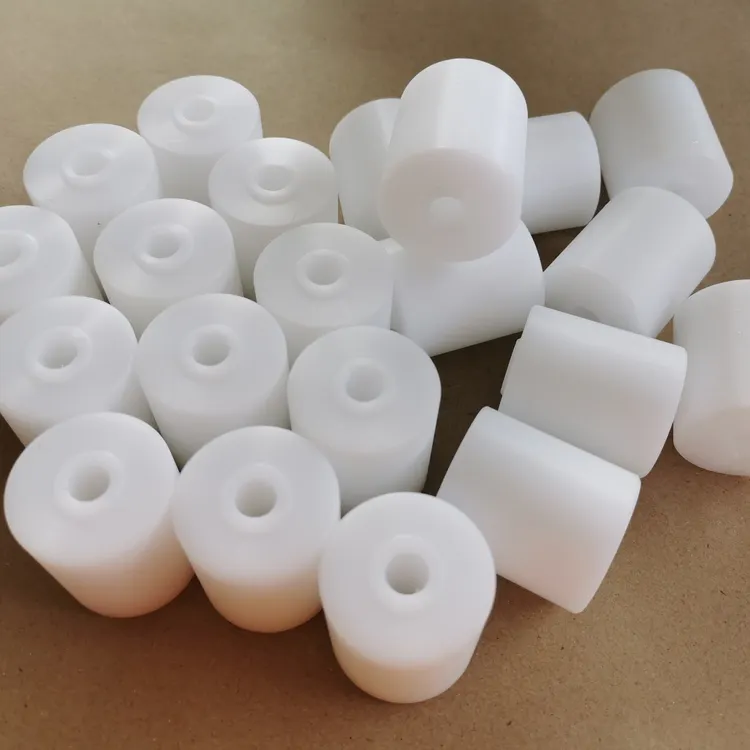
Polytetrafluoroethylene (PTFE) represents a high-performance fluoropolymer consisting of carbon and fluorine atoms. The Polytetrafluoroethylene synthetic material features a molecular chain of repeating tetrafluoroethylene units. Strong carbon-fluorine bonds provide extreme chemical resistance and thermal stability. Manufacturers utilize PTFE for non-stick surfaces and low-friction components in diverse engineering fields. Aerospace, medical, and industrial sectors rely on its unique physical properties for critical hardware. Precise molecular engineering enables the creation of materials that withstand the harshest environments on Earth.
What is Teflon?
Teflon is a synthetic fluoropolymer of tetrafluoroethylene known scientifically as polytetrafluoroethylene or PTFE. Teflon's molecular structure consists entirely of carbon and fluorine atoms arranged in a long polymer chain. Chemists classify PTFE as a high-molecular-weight fluorocarbon solid with one of the lowest coefficients of friction against any solid. Roy J. Plunkett discovered the substance by accident while researching refrigerant gases for the DuPont company in 1938. Early industrial applications focused on the Manhattan Project for handling highly corrosive uranium hexafluoride gas. Modern industries apply the material in various forms like coatings, gaskets, and seals due to its extreme non-reactivity. The material remains stable at high temperatures while resisting most aggressive chemicals. Cookware manufacturers popularized the brand name for non-stick frying pans and kitchen utensils. PTFE is widely specified for chemical resistance and low friction, but it has relatively low mechanical strength and wear resistance. Aerospace technology relies on the polymer for wire insulation and fuel line components in vacuum environments. Medical practitioners use the substance for implantable grafts because the human body does not reject the inert surface.
What is the Chemical Composition and Structure of PTFE?
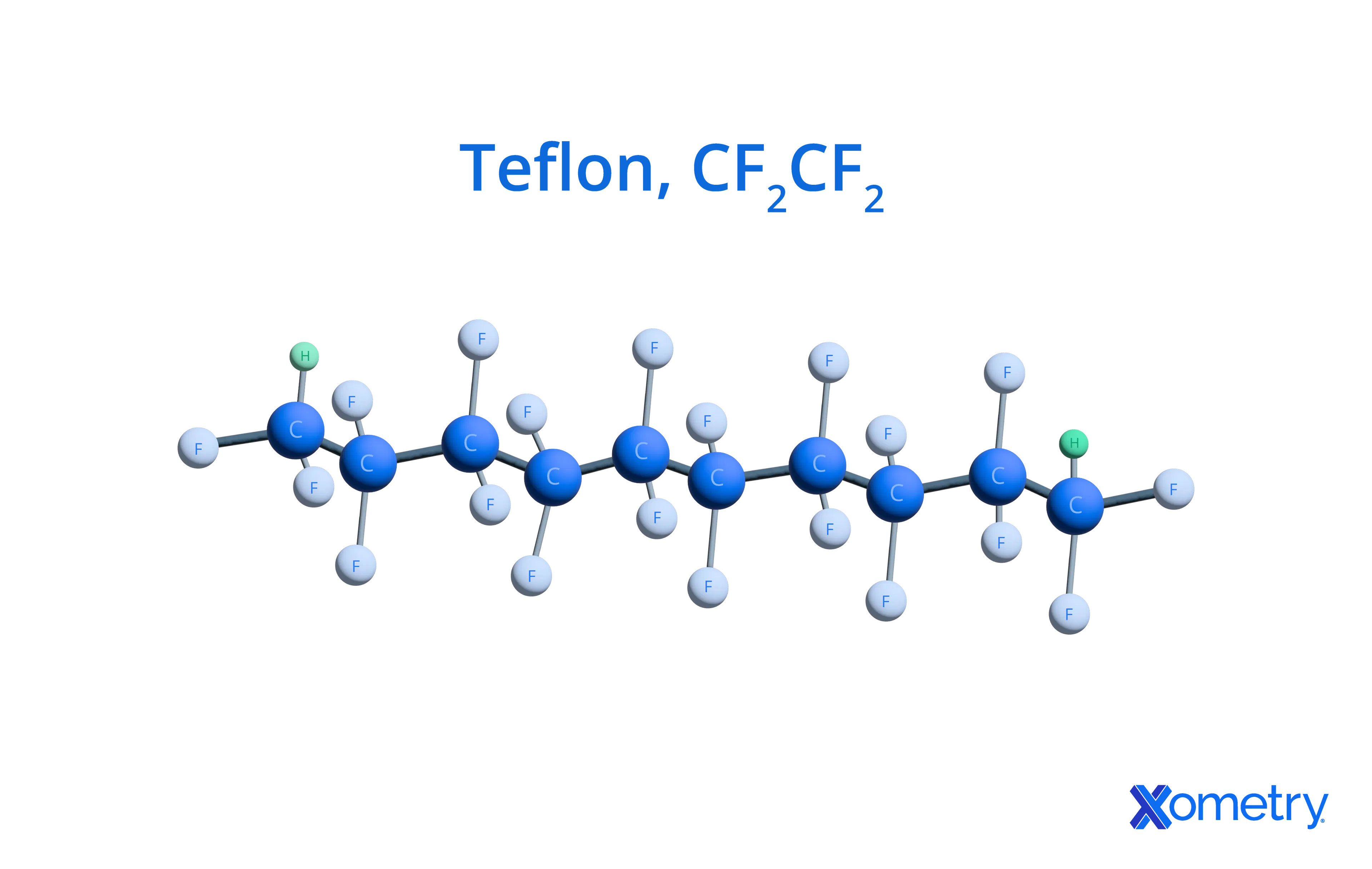
The chemical composition and structure of PTFE follow the formula (C₂F₄)n, which indicates a polymer composed of tetrafluoroethylene monomers. Each carbon atom in PTFE is bonded to two fluorine atoms and two carbon atoms in a repeating chain. The carbon-fluorine bonds create a protective sheath around the carbon backbone of the polymer. The high electronegativity of fluorine prevents other molecules from reacting with the carbon atoms. The specific arrangement results in an inert material that resists chemical attack from acids and bases. High bond energy ensures the polymer maintains integrity under extreme thermal conditions. The uniform distribution of fluorine atoms creates a smooth surface with minimal intermolecular forces. Such a configuration explains the characteristic non-stick performance and hydrophobic behavior. Engineering designs utilize the unique Structure of PTFE to prevent adhesion in mechanical systems. Synthetic polymers with the specific bond structure provide superior insulation for electrical wiring. Chain length (molecular weight) influences mechanical properties, but density is primarily determined by crystallinity and processing conditions.
How Was Teflon Discovered?
Teflon was discovered in 1938 by a research chemist named Roy J. Plunkett working for the DuPont company. Plunkett noticed a white, waxy solid inside a pressurized cylinder containing tetrafluoroethylene gas used for refrigeration experiments. Chemical analysis revealed the gas had polymerized into a unique solid material with extraordinary slipperiness. Early development focused on military applications due to the extreme resistance of the substance to corrosive elements. DuPont trademarked the name Teflon in 1944 to market the fluoropolymer for industrial and consumer use. The material became a critical component in the development of nuclear energy and aerospace technology during the mid-twentieth century. Commercial success followed with the introduction of non-stick cookware in the 1960s. Science continues to explore new methods for refining the polymerization process for advanced engineering needs. Unexpected results in the laboratory led to the creation of one of the most significant materials in modern history. The discovery represents a classic example of serendipity in scientific research, leading to global industrial transformation.
What Does PTFE Stand For?
PTFE stands for Polytetrafluoroethylene, which describes the specific chemical arrangement of the polymer. Poly refers to the many repeating units that form the long molecular chain characteristic of plastics. Tetra signifies the four fluorine atoms attached to each carbon segment in the basic monomer unit. Fluoro identifies the presence of fluorine, which provides the material with its unique non-stick and chemical-resistant properties. Ethylene describes the carbon-to-carbon backbone that serves as the foundation for the entire polymer structure. Science utilizes a complex name to distinguish the material from other fluoropolymers in the same chemical family. The component of the name provides a roadmap for understanding the molecular behavior and physical characteristics of the substance. Chemists rely on the terminology to communicate the precise makeup of synthetic resins used in manufacturing. Understanding the nomenclature helps engineers select the correct material for high-performance applications. Industrial designers use the acronym for convenience in technical documentation. The full name conveys the complexity and stability of the carbon-fluorine bond system.
PTFE is a fluoropolymer defined by strong carbon–fluorine bonds and very low surface energy. Its fully fluorinated backbone gives it exceptional chemical inertness, broad thermal stability from cryogenic conditions to about 260 °C, and one of the lowest friction coefficients of any solid material, which makes it valuable in low-lubrication tribological applications. It also offers high dielectric strength and volume resistivity, making it reliable for high-frequency and high-voltage insulation. Its main mechanical limitation is softness and creep under sustained load, so fillers such as glass, carbon, or bronze are often added to improve wear resistance and dimensional stability. Because it is also hydrophobic and non-reactive, PTFE performs well in high-purity and corrosive environments, including chemical processing and medical service. In engineering practice, PTFE is chosen less for structural strength than for chemical resistance, thermal durability, and controlled surface behavior in demanding systems.
What is Teflon Made Of?
Teflon is made of tetrafluoroethylene monomers that undergo a high-pressure polymerization process to form a long-chain polymer. Manufacturers produce the raw gas monomer through the pyrolysis of chlorodifluoromethane at high temperatures. The resulting molecules contain two carbon atoms double-bonded to each other and four fluorine atoms. Initiators trigger the reaction that breaks the double bonds and allows the monomers to link together into a solid resin. The transformation occurs in a controlled water-based environment to manage the heat generated by the chemical reaction. The resulting PTFE resin exists as small white particles or a milky dispersion, depending on the specific manufacturing method used. Industrial plants dry and refine the particles into different grades for further processing into solid parts. Quality control ensures the absence of impurities that might compromise the chemical resistance or thermal stability of the final product. Every step in the synthesis focuses on maintaining the purity and consistency of the fluorocarbon chain. The resulting material provides a combination of properties unavailable in natural or other synthetic plastics.
What Are the General Properties of PTFE?
The general properties of PTFE are listed below.
- Non-stick Nature: The surface energy remains extremely low to prevent materials from adhering to the polymer. The property facilitates easy cleaning and smooth material flow in industrial pipelines.
- Chemical Inertness: Strong atomic bonds resist degradation from concentrated acids and corrosive solvents. The material remains unaffected by almost all known chemical reagents.
- Low Friction: The coefficient of friction ranks among the lowest of any known solid material. Moving parts operate with minimal resistance and reduced wear during mechanical operations.
- High Heat Resistance: The polymer maintains physical integrity across a wide temperature range from -200 to +260 degrees Celsius. PTFE remains stable at low temperatures but can become less ductile; it does not melt conventionally but softens above its melting point (~327°C).
What Are the Mechanical Properties of PTFE?
The mechanical properties of PTFE are listed below.
- Tensile Strength: The material resists breaking under tension, although its strength remains lower than that of structural plastics. It provides sufficient strength for seals and gaskets in pressurized systems.
- Elongation: Polymers exhibit significant stretching before failure occurs in mechanical tests. The flexibility allows the material to conform to irregular surfaces in sealing applications.
- Hardness: Surfaces remain relatively soft compared to other engineering plastics like acetal or nylon. The low hardness contributes to the excellent sealing characteristics against metal faces.
- Wear Resistance: PTFE has poor wear resistance in unfilled form; fillers (e.g., glass, carbon, bronze) are required to improve wear performance. Fillers improve the property for use in high-speed rotating machinery.
What Are the Electrical Properties of PTFE?
The electrical properties of PTFE are listed below.
- Dielectric Constant: The value remains low and stable across a wide range of frequencies and temperatures. The characteristic makes the material ideal for high-frequency circuit boards and insulation.
- Insulation Resistance: Surfaces prevent the flow of electrical current even in high-voltage applications. Reliable insulation ensures safety and performance in complex electronic systems.
- Volume Resistivity: The material provides high resistance to electrical leakage through its bulk structure. It remains one of the most effective electrical insulators available for industrial use.
What Are the Thermal Properties of PTFE?
The thermal properties of PTFE are listed below.
- Melting Point: The crystalline structure transitions to an amorphous state at approximately 327 degrees Celsius. PTFE remains stable up to ~260°C in continuous use; degradation begins above this despite a higher melting point.
- Thermal Expansion: Dimensions change as the temperature rises throughout the operating range. Engineers calculate clearances to accommodate the volumetric shifts in mechanical assemblies.
- Heat Deflection Temperature: PTFE has relatively low mechanical stiffness and significant creep, so shape retention under load is limited compared to many engineering plastics. The material performs reliably in environments where heat would cause other plastics to fail.
What Are the Chemical Properties of PTFE?
The chemical properties of PTFE are listed below.
- Corrosion Resistance: Surfaces remain immune to the damaging effects of oxidation and moisture. The polymer does not rust or degrade when exposed to harsh outdoor environments.
- Chemical Inertness: Molecular bonds prevent reactions with almost all industrial solvents and reagents. The material serves as the primary choice for handling aggressive chemicals in laboratories.
- Stability Under Acids: Strong acids like sulfuric or hydrochloric acid do not break down the polymer chains. Base solutions fail to cause degradation or swelling of the solid material.
What Are the Optical Properties of PTFE?
The optical properties of PTFE are listed below.
- Transparency Levels: The material appears translucent to opaque white in its natural solid state. Thin films allow light to pass through while thick sections block visibility completely.
- Reflectivity: PTFE exhibits high diffuse reflectivity (especially in white form), though not as specular as polished metals or glass. The characteristic reduces glare in industrial workstations and housing components.
- UV Resistance: Exposure to ultraviolet radiation does not degrade the polymer or change its color. Long-term outdoor use remains possible without the loss of physical properties or cracking.
What Are the Grades and Types of PTFE?
The grades and types of PTFE are listed below.
- Granular PTFE: Large particles facilitate the creation of thick billets and molded shapes through compression. The grade offers the highest purity and best electrical performance for industrial components.
- Fine Powder PTFE: Small particles allow for paste extrusion into thin-walled tubes and flexible tapes. The type provides superior tensile strength and flexibility for wire insulation and hoses.
- Dispersion PTFE: A liquid suspension of polymer particles enables the coating of metal surfaces and industrial fabrics. The process creates a smooth, non-stick barrier for cookware and filtration systems.
- Film PTFE: Thin layers are produced through skiving or casting for use as electrical tape and moisture barriers. The material maintains high dielectric strength and chemical resistance at minimal thicknesses.
- Expanded PTFE: A microporous structure allows for breathability while maintaining total water resistance. The material serves as a critical component in medical implants and high-performance garments.
- Filled Grades: Additives like carbon, glass, or bronze improve the mechanical strength and wear resistance of the base polymer. The specialized blends overcome the natural softness of the resin for heavy-duty applications.
1. Granular PTFE
Manufacturers produce Granular PTFE type of resin through a suspension polymerization process. The resulting large particles are ideal for compression molding and ram extrusion. Industrial parts like billets and thick sheets originate from its specific grade. It offers the best electrical properties and chemical resistance among all forms. Technicians use it to create heavy-duty seals and structural components.
2. Fine Powder PTFE
Fine Powder PTFE grade consists of very small particles produced through emulsion polymerization. Producers mix the powder with a lubricant to enable paste extrusion for thin-walled tubes and tapes. Wire insulation and high-performance hoses rely on the unique properties of the form. Fine powder PTFE enables good flexibility and processability, but PTFE has relatively low tensile strength compared to many engineering plastics. It remains a critical material for the aerospace and automotive industries.
3. Micro Powder PTFE
The Micro Powder PTFE exists as extremely fine particles used primarily as an additive in other substances. It improves the lubricity and wear resistance of inks, coatings, and lubricants. Manufacturers blend the powder into other plastics to reduce their coefficient of friction. The small particle size ensures a uniform distribution within the host material. It serves as a performance enhancer in various industrial formulations.
4. Dispersion PTFE
The Dispersion PTFE consists of a liquid coating containing fine polymer particles suspended in water. It allows for the application of thin non-stick layers onto metal surfaces like cookware. Industrial fabrics and filters receive coatings from the dispersion to gain chemical resistance. The process involves dipping or spraying, followed by a drying and sintering stage. It provides a smooth and continuous protective barrier for diverse substrates.
5. Film PTFE
Manufacturers produce Film PTFE thin sheets of the material through a skiving or casting process. PTFE films serve as excellent electrical insulation for capacitors and high-temperature wiring. The material maintains its physical properties even at very low thicknesses. It provides a non-stick surface for conveyor belts and heat-sealing equipment. Packaging industries utilize the film for its moisture barrier and release properties.
6. Expanded PTFE
The specialized Expanded PTFE form features a microporous structure created by rapidly stretching the polymer. It allows the passage of gases and water vapor while resisting liquid water penetration under typical conditions; it is not completely waterproof under all pressures. Medical implants and high-performance outdoor clothing utilize the unique breathable characteristic. The material offers increased flexibility and softness compared to solid grades. It provides excellent sealing performance for gaskets in fragile or irregular joints.
What is Filled PTFE? (Carbon, Glass, Bronze-Filled PTFE)
Filled PTFE consists of the base fluoropolymer combined with specific additives to improve its mechanical performance. Manufacturers incorporate carbon, glass fibers, or bronze powder into the resin before the sintering process. The fillers improve the wear resistance and load-bearing capacity of the material compared to virgin grades. Carbon fillers increase electrical conductivity and thermal dissipation for parts used in dynamic sealing. Glass fibers enhance the stiffness and dimensional stability of components under high pressure. Bronze additions provide superior heat transfer and resistance to deformation under heavy mechanical loads. Additives reduce the tendency of the polymer to creep or flow over time. Engineers select specific filled grades to meet the rigorous demands of industrial machinery and automotive engines. The modification process generally retains much of PTFE’s chemical resistance, but some fillers can reduce chemical resistance depending on the environment. Specialized blends provide tailored solutions for high-friction environments where standard plastics fail.
How is PTFE Manufactured?
First, raw tetrafluoroethylene monomers undergo a polymerization process in a pressurized reactor with water and catalysts. Second, the reaction creates either granular resin or fine powder, depending on the specific chemicals and agitation levels used. Third, technicians dry and sift the resulting polymer to ensure uniform particle size for processing. Fourth, compression molding or extrusion shapes the resin into billets or continuous profiles under high pressure. Fifth, a sintering process heats the shaped material to approximately 370 degrees Celsius to fuse the particles into a solid mass. Lastly, machining or skiving operations finish the parts to reach precise dimensions for the PTFE Manufactured components.
What Are the Common Applications of PTFE?
The common applications of PTFE are listed below.
- Cookware Coatings: The non-stick surface allows for cooking with minimal oil and easy cleanup of frying pans. Kitchen appliances utilize the coating to prevent food from adhering to heating elements.
- Industrial Seals: Gaskets and O-rings provide highly chemical-resistant sealing but are not inherently leak-proof under all pressures and conditions. The inertness of the material ensures long-term reliability in aggressive environments.
- Electrical Insulation: Wire coatings and circuit board substrates utilize the high dielectric strength of the polymer for safety. Electronic devices operate efficiently with minimal signal loss due to the low dissipation factor.
- Medical Implants: Biocompatible grafts and catheters minimize the risk of rejection by the human body during surgical procedures. The low-friction surface lessens damage, but it can still occur depending on the procedure and conditions, such as tissue damage during the insertion of medical tools.
- Aerospace Components: Fuel lines and wire harnesses withstand the vacuum of space and extreme temperature fluctuations. PTFE is relatively dense compared to many polymers; its use is driven by chemical resistance, temperature stability, and dielectric properties rather than lightweight characteristics.
Is PTFE Safe for Food and Medical Use?
Yes, PTFE is safe for food and medical use when manufactured according to regulatory standards and used within recommended temperature ranges. The Food and Drug Administration (FDA) and European Union (EU) health agencies approve specific grades for direct contact with food products. Medical device manufacturers utilize the material for catheters and implants due to its high biocompatibility and low friction. The inert nature of the polymer prevents harmful chemical leaching into food or human tissue. PTFE begins to degrade and can release toxic fumes at temperatures typically above ~300–350°C; 260°C is a commonly recommended continuous service limit, not the decomposition threshold. Proper maintenance ensures the material remains intact and functional for kitchen applications. Healthcare professionals rely on the sterile properties of the fluoropolymer for surgical tools. Regulatory compliance confirms the PTFE Safe designation for consumer and professional applications.
What Are the Advantages of Using PTFE?
The advantages of using PTFE are listed below.
- Low Friction: PTFE has one of the lowest coefficients of friction among solid materials, but not universally the lowest in all conditions. The advantage reduces energy consumption and heat generation in industrial machinery.
- Heat Resistance: PTFE retains useful properties over a very wide temperature range (approximately -200°C to 260°C), but properties do change across this range. The stability allows for use in extreme thermal environments where other materials fail.
- Chemical Inertness: PTFE is highly chemically resistant to most chemicals but can be attacked by certain substances such as molten alkali metals and highly reactive fluorinating agents. The non-reactivity ensures the purity of substances processed in fluoropolymer-lined systems.
What Are the Disadvantages of PTFE?
The disadvantages of using PTFE are listed below.
- High Cost: The complex manufacturing and sintering processes make the material more expensive than standard thermoplastics. Budget constraints limit its use to applications where performance is critical.
- Poor Mechanical Strength: The resin is relatively soft and lacks the structural rigidity of metals or engineering plastics like nylon. Parts require careful design or fillers to support heavy mechanical loads.
- Creep Behavior: The material undergoes permanent deformation over time when subjected to constant pressure or stress. The cold flow tendency necessitates the use of reinforcements in high-pressure sealing.
What is the Difference between PTFE vs. Other Plastics
The difference between PTFE (Polytetrafluoroethylene) and other plastics lies in its unique combination of properties, such as its exceptional chemical resistance, high-temperature stability, and low friction. PTFE offers superior thermal stability and chemical resistance compared to common materials like nylon, PVC, and polyethylene. Many plastics degrade or melt at lower temperatures than PTFE, but PTFE itself also has temperature limits and does not remain completely stable under all high-temperature conditions. Nylon absorbs moisture from the environment, which leads to dimensional changes, while PTFE remains entirely hydrophobic. PVC provides good chemical resistance but does not match the inertness of the fluoropolymer against concentrated acids. Polypropylene and polyethylene offer low cost but lack the high-temperature performance and low-friction characteristics of Teflon. PTFE has one of the lowest coefficients of friction among industrial plastics, but not universally the lowest in all conditions. Engineering applications requiring high purity and non-reactivity specify fluoropolymers over standard thermoplastics. PTFE has uniquely low surface energy and high chemical inertness, but some materials may match or exceed specific surface or tribological properties under certain conditions. Users choose the material for specialized environments where durability and reliability are critical factors. The performance gap becomes evident in high-heat and chemically aggressive industrial settings when considering PTFE vs. Other Plastics.
What is the Difference Between PTFE, Silicone, and Rubber Materials?
The difference between PTFE, silicone, and rubber materials lies in their flexibility, thermal range, and chemical compatibility. Rubber materials provide excellent elasticity and sealing, but resistance to oils and heat varies significantly by rubber type (e.g., NBR resists oils; EPDM resists heat and weathering). Silicone offers better temperature resistance than rubber but lacks the extreme chemical inertness found in fluoropolymers. PTFE maintains its properties in environments that would cause silicone to swell or rubber to disintegrate. The stiffness of PTFE is much higher than that of elastomers, making it less suitable for applications requiring high stretch. Sealing performance in rubber depends on compression, while PTFE seals rely on precise machining and mechanical tension. Industrial designers select the fluoropolymer for high-vacuum and high-purity systems where outgassing must be avoided. Silicone serves well in medical and food applications, but does not offer the same low-friction surface as Teflon. The material serves a distinct purpose based on the environmental stresses of the application. Engineers evaluate the specific needs of a system before choosing between PTFE, Silicone, and Rubber Materials.
What Are Environmental and Recycling Considerations of PTFE?
Environmental and recycling considerations of PTFE focus on the extreme durability and non-biodegradable nature of the fluoropolymer. The material does not break down in natural environments, which leads to long-term persistence in landfills. Recycling remains a challenge because the sintering process makes the polymer difficult to melt and reprocess like standard plastics. Specialized facilities use mechanical grinding to turn scrap material into micronized powders for use as additives in other products. Recent innovations explore chemical recycling methods to break the polymer back down into its original monomers. Environmental regulations aim to reduce the release of perfluorinated compounds during the manufacturing phase. Producers implement advanced filtration and capture systems to minimize the ecological footprint of the chemical synthesis. Sustainable practices focus on extending the life of products to reduce the frequency of disposal. Research into eco-friendly alternatives continues to grow as industries seek to balance performance with environmental responsibility. Efficient waste management systems help mitigate the impact of industrial plastics on the planet.
How is PTFE Processed and Formed into Products?
To process and form PTFE into Products, follow the four steps below.
- Mold Resin. Place granular PTFE into a mold and apply high pressure at room temperature to create a preform. The step ensures the particles settle into the desired shape before the heating stage begins.
- Sinter Parts. Heat the molded preform in a controlled oven to temperatures near the melting point of the polymer. The thermal treatment fuses the particles together to form a dense and strong solid structure.
- Extrude Profiles. Force fine powder PTFE is processed by paste extrusion using a lubricant and ram extrusion to create rods or tubes. The continuous process produces uniform cross-sections for industrial seals and piping components.
- Skive Sheets. Rotate a sintered billet against a sharp blade to peel off thin layers of plastic film. The technique allows for the production of flexible membranes and insulation tapes of various thicknesses.
What Are the Frequently Asked Questions About PTFE
The frequently asked questions about PTFE are listed below.
- Chemical Composition: Polytetrafluoroethylene consists of a long chain of carbon atoms completely surrounded by fluorine atoms. The structure provides the material with its characteristic slipperiness and resistance to heat.
- Maximum Temperature: The polymer remains functional and stable up to an operating temperature of 260 degrees Celsius. Exceeding ~260°C affects performance, while significant thermal degradation and gas release typically occur at higher temperatures (~300–350°C and above).
- Friction Coefficient: Surfaces possess one of the lowest coefficients of friction ever measured for a solid substance. The property makes it a common choice for low-friction applications, but not always the primary choice due to wear and load limitations.
- Water Resistance: The material is entirely hydrophobic and does not absorb liquid water or atmospheric moisture. Electrical and mechanical properties remain consistent even in high-humidity or underwater environments.
How Xometry Can help with PTFE Machining and Prototyping
First, Xometry provides access to a vast network of manufacturing facilities equipped for precise PTFE machining and prototyping. Second, the platform offers instant quoting for custom parts to accelerate the development cycle of engineering projects. Third, experienced technicians utilize advanced CNC milling and turning to reach tight tolerances on fluoropolymer components. Fourth, the service includes options for injection molding and extrusion to support small-scale and high-volume production needs. Fifth, quality assurance processes ensure that every part meets the specified material standards and dimensional requirements. Lastly, the streamlined logistics system delivers finished PTFE products directly to the client for immediate integration into their systems.
Copyright and Trademark Notices
- Teflon® is a trademark of the Chemours Company
- Rulon® is a trademark of the Dixon Industries Corporation
Disclaimer
The content appearing on this webpage is for informational purposes only. Xometry makes no representation or warranty of any kind, be it expressed or implied, as to the accuracy, completeness, or validity of the information. Any performance parameters, geometric tolerances, specific design features, quality and types of materials, or processes should not be inferred to represent what will be delivered by third-party suppliers or manufacturers through Xometry’s network. Buyers seeking quotes for parts are responsible for defining the specific requirements for those parts. Please refer to our terms and conditions for more information.