4340 Carbon Steel: Uses, Composition, Properties


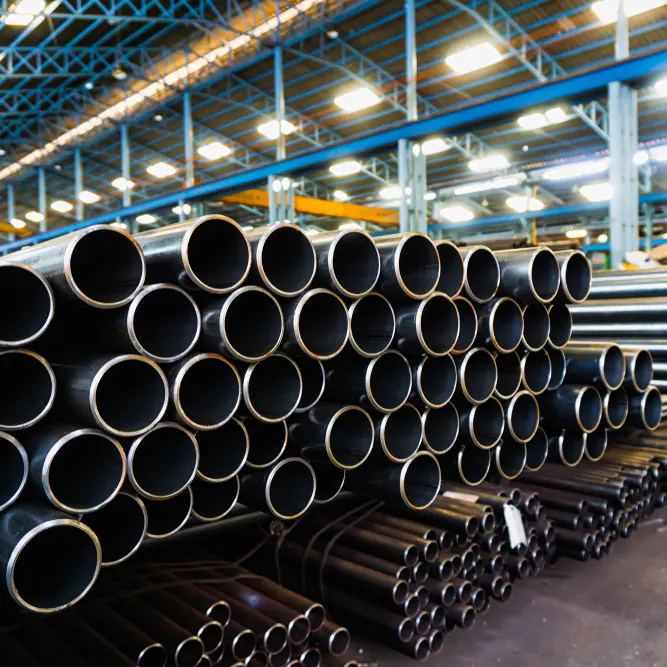
4340 carbon steel is a nickel-chromium-molybdenum alloy steel classified under the AISI/SAE designation system as a high-strength, deep-hardenable engineering material. The 4340 carbon steel contains a balanced combination of nickel (1.65% to 2.00%), chromium (0.70% to 0.90%), and molybdenum (0.20% to 0.30%) alongside a carbon content of 0.38% to 0.43%, producing a steel with exceptional tensile strength, impact toughness, and fatigue resistance across large cross-sections. 4340 steel achieves tensile strengths from 125,000 to over 280,000 PSI depending on heat treatment condition, placing it among the highest-performing alloy steels in the AISI/SAE system. The deep hardenability of 4340 distinguishes it from simpler alloy steels, allowing full martensitic transformation through section thicknesses exceeding 4 inches during quenching.
4340 steel is used across aerospace landing gear, automotive racing components, oil and gas drilling equipment, heavy machinery shafts, and military ordnance, where the combination of high strength, toughness, and reliable heat treatment response is required. The alloy responds well to quenching and tempering, nitriding, and carburizing, extending its application range across surface-hardened and through-hardened components. The article covers the chemical composition, mechanical properties, physical properties, common uses, international equivalent grades, advantages, disadvantages, and comparisons with related alloy steels, including 4140, 4330, and 300M, providing a complete technical reference for engineers and procurement teams selecting high-strength alloy steel for demanding applications.
What Is 4340 Carbon Steel?
4340 steel is a nickel-chromium-molybdenum low-alloy steel designated under the AISI/SAE numbering system, where the prefix "43" identifies the nickel-chromium-molybdenum alloy family and "40" indicates a nominal carbon content of 0.40%. The steel is classified as an alloy steel rather than a carbon steel, despite the "carbon steel" label appearing in common usage, because the mechanical properties of 4340 are primarily determined by its alloying elements rather than carbon content alone. The nickel content from 1.65% to 2.00% provides toughness and impact resistance, the chromium content from 0.70% to 0.90% contributes to hardenability and wear resistance, and the molybdenum content from 0.20% to 0.30% suppresses temper embrittlement and enhances high-temperature strength. The combined effect of the three alloying elements produces a steel with deep hardenability, uniform mechanical properties through large cross-sections, and a strength-to-toughness combination that exceeds most single-element alloy steels. The Carbon steel (CS) grades covering the broader family of iron-carbon alloys provide the foundational classification context within which 4340 is positioned as a premium low-alloy variant.
How Is 4340 Carbon Steel Made?
4340 steel is produced through electric arc furnace (EAF) melting followed by ladle refining and either conventional ingot casting or vacuum arc remelting (VAR), depending on the cleanliness and fatigue performance requirements of the intended application. The EAF process melts steel scrap and alloy additions at temperatures above 2,900°F, with the melt composition adjusted to meet AISI/SAE 4340 specification limits for carbon, nickel, chromium, molybdenum, and residual elements. Ladle refining removes sulfur to levels below 0.010% and controls oxygen content through argon stirring and synthetic slag treatment, improving inclusion cleanliness and toughness in the finished bar. Vacuum arc remelting, applied to aerospace and premium grades, re-melts a consumable 4340 electrode under vacuum in a water-cooled copper mold, significantly reducing hydrogen levels, reducing oxide inclusions, and producing a refined columnar grain structure that improves fatigue life by 20% to 40% over conventionally cast material. Hot rolling at temperatures from 2,100°F to 2,300°F breaks down the cast ingot structure, refines the austenite grain size, and produces the bar, plate, or billet forms supplied to manufacturers for subsequent machining and heat treatment.
Is 4340 Stainless Steel?
No, 4340 is not stainless steel. The classification boundary from alloy steel to stainless steel is defined by a minimum chromium content of 10.5% by weight, which forms a self-repairing chromium oxide passive film on the steel surface that prevents rust and corrosion in atmospheric and mildly corrosive environments. 4340 steel contains only 0.70% to 0.90% chromium, approximately one-twelfth the minimum chromium level required for the stainless classification, meaning the alloy does not develop a protective passive film and corrodes in the presence of moisture and oxygen without protective coatings or surface treatments. The chromium in 4340 contributes to hardenability and wear resistance rather than corrosion protection. The Stainless steel (SS) grades achieve their corrosion resistance through chromium contents from 10.5% to 30%, a fundamentally different alloy design philosophy from the strength and hardenability focus of 4340 and other AISI/SAE low-alloy steels.
What Are the Common Uses of 4340 Carbon Steel?
The common uses of 4340 Carbon Steel are listed below.
- Aerospace Components: 4340 steel is used for landing gear struts, actuator cylinders, arresting hooks, and structural airframe fittings where tensile strengths from 260,000 to 280,000 PSI are required at section sizes from 1 to 6 inches. The alloy meets AMS 6415 and AMS 6414 (VAR quality) specifications governing material cleanliness, heat treatment response, and mechanical property minimums for aerospace structural applications. Fatigue resistance and fracture toughness of heat-treated 4340 support the millions of load cycles experienced by landing gear components over a 30-year aircraft service life.
- Automotive Parts: 4340 steel is used in high-performance and racing automotive applications for crankshafts, connecting rods, axle shafts, and transmission gears where the combination of high tensile strength and impact resistance is required under cyclic loading at elevated temperatures. Racing crankshafts manufactured from 4340 achieve tensile strengths from 125,000 to 150,000 PSI after quench and temper, providing the fatigue life needed to withstand engine speeds above 8,000 RPM in motorsport applications.
- Oil and Gas Equipment: 4340 steel is used for drill collars, tool joints, kelly bars, and downhole drilling tools operating in high-pressure, high-temperature wellbore environments where tensile strengths from 130,000 to 150,000 PSI and impact toughness above 40 foot-pounds at minus 20°F are required by API specifications. The deep hardenability of 4340 ensures consistent mechanical properties through the thick wall sections of drill collars with outer diameters from 4 to 10 inches.
- Heavy Machinery and Industrial Equipment: 4340 steel is used for large shafts, spindles, gears, and couplings in mining equipment, paper mill rolls, and industrial gearboxes, where the combination of high strength and toughness resists fatigue failure under heavy cyclic loads. Gear blanks and pinion shafts manufactured from 4340 are nitrided or carburized to achieve case hardness from 58 to 62 Rockwell C at depths from 0.020 to 0.060 inches while retaining a tough core with tensile strength from 125,000 to 150,000 PSI.
- Defense and Military Applications: 4340 steel is used for gun barrels, breech mechanisms, artillery components, armor-piercing projectile bodies, and military vehicle drive shafts where high tensile strength, toughness under shock loading, and resistance to fatigue are required by military material specifications (MIL-S-8699). The alloy's deep hardenability ensures uniform properties through the thick wall sections of gun barrel forgings with outside diameters from 2 to 8 inches.
- Tooling and High-Strength Fasteners: 4340 steel is used for large die blocks, press tooling, high-strength structural bolts, and anchor bolts in grades requiring proof strengths of 120,000 PSI and tensile strengths of 150,000 PSI per ASTM F3125 Grade A490. The alloy's machinability in the annealed condition, with a machinability rating of approximately 57 on the standard index relative to 1212 free-machining steel at 100, allows complex tooling geometries to be machined before final heat treatment to full hardness.
What Components Are Typically Made From 4340 Steel?
The components typically made from 4340 steel are listed below.
- Landing Gear Struts: Landing gear struts on commercial and military aircraft are forged from 4340 VAR-quality steel per AMS 6414, heat-treated to tensile strengths from 260,000 to 280,000 PSI, and cadmium or chrome-plated to resist corrosion in service.
- Crankshafts: High-performance crankshafts are forged or billet-machined from 4340 bar stock, heat-treated to 125,000 to 150,000 PSI tensile strength, and nitrided to achieve surface hardness from 55 to 62 Rockwell C for wear resistance at main and rod journal contact surfaces.
- Drive Shafts: Military vehicle and heavy truck drive shafts are manufactured from 4340 tubing or solid bar, induction hardened at spline and bearing journal locations to 50 to 58 Rockwell C while retaining a tough core to resist torsional shock loads.
- Drill Collars: Oil field drill collars are machined from 4340 or 4145H bar stock, heat-treated to API Grade S135 minimum yield strength of 135,000 PSI, and threaded at each end with API rotary shoulder connections that withstand the combined tension, torque, and bending loads of rotary drilling operations.
- Gear Blanks: Industrial gearbox pinions and bull gears are rough machined from 4340 forgings, carburized to case depths from 0.040 to 0.100 inches, quenched and tempered to achieve case hardness of 58 to 62 Rockwell C with core hardness from 28 to 34 Rockwell C for the combination of surface wear resistance and core toughness required in heavy-duty power transmission.
- Structural Bolts: High-strength structural bolts in grades equivalent to ASTM A490 are manufactured from 4340 bar stock, heat-treated to proof loads from 144,000 to 175,000 PSI, and used in heavy steel construction, bridge connections, and machinery base frame assemblies requiring the highest fastener strength class.
Can 4340 Steel Be Used in Aerospace Applications?
Yes, 4340 steel is widely used in aerospace applications and is governed by specific material and process specifications that define the quality level required for flight-critical structural components. AMS 6415 covers 4340 steel bars, forgings, and tubing produced by conventional melting, while AMS 6414 specifies the vacuum arc remelted (VAR) quality required for the highest fatigue life and fracture toughness in landing gear and primary structural applications. 4340 VAR material achieves fatigue lives 20% to 40% above conventionally melted equivalents due to the reduced inclusion content produced by the vacuum remelting process, a difference that is critical for components experiencing millions of stress cycles over a 30-year aircraft service life. Fracture toughness values (KIc) for heat-treated 4340 range from 50 to 80 ksi√in, depending on strength level and temper, meeting the damage tolerance requirements of FAA and military airworthiness regulations for primary structural steel components.
"Engineering precision relies on the reconciliation of geometric ideals with the inherent variability of metallurgical processes: particularly the way deep-hardenable alloys respond to rapid thermal shifts. Robust design for manufacturing requires that we anticipate these physical constraints (such as quench distortion or residual stress) during the initial design phase to prevent structural failure."
What Is the Chemical Composition of 4340 Carbon Steel?
The chemical composition of 4340 Carbon Steel is listed below.
- Carbon (C): Carbon content in 4340 steel ranges from 0.38% to 0.43% by weight per AISI/SAE standards, providing the primary hardening element that forms martensite during quenching and determines the maximum attainable hardness of the steel. At 0.40% nominal carbon, 4340 achieves a maximum as-quenched hardness of approximately 57 Rockwell C, sufficient for high-strength structural applications after tempering to the required toughness level.
- Manganese (Mn): Manganese content ranges from 0.60% to 0.80% by weight, contributing to hardenability, deoxidation during steelmaking, and sulfur neutralization through the formation of manganese sulfide inclusions that are less harmful to toughness than iron sulfide. Manganese increases the hardenability of 4340 by shifting the time-temperature-transformation (TTT) curve to longer times, allowing slower cooling rates to achieve full martensitic transformation in large cross-sections.
- Silicon (Si): Silicon content ranges from 0.15% to 0.35% by weight, acting as a deoxidizer during steelmaking and contributing moderate solid solution strengthening to the ferrite matrix. Silicon raises the elastic limit of the steel and improves resistance to softening during tempering at temperatures above 400°F.
- Nickel (Ni): Nickel content ranges from 1.65% to 2.00% by weight, providing the most significant contribution to toughness and impact resistance in the alloy by increasing the energy required for crack propagation in the tempered martensitic microstructure. Nickel lowers the ductile-to-brittle transition temperature of 4340, maintaining impact toughness above 40 foot-pounds at temperatures as low as -40°F in properly heat-treated material.
- Chromium (Cr): Chromium content ranges from 0.70% to 0.90% by weight, enhancing hardenability, wear resistance, and resistance to softening during tempering through the formation of stable chromium carbides in the tempered martensite matrix. Chromium increases the hardenability of 4340 by a factor of approximately 1.5 to 2.0 compared to plain carbon steel at equivalent carbon content.
- Molybdenum (Mo): Molybdenum content ranges from 0.20% to 0.30% by weight, suppressing temper embrittlement by retarding the segregation of phosphorus and tin to prior austenite grain boundaries during slow cooling through the 700°F to 1,000°F temperature range. Molybdenum also forms stable carbides that resist dissolution at austenitizing temperatures, contributing to hardenability and elevated temperature strength.
- Phosphorus (P): Phosphorus content is limited to a maximum of 0.035% by weight per AISI/SAE standards, as phosphorus segregates to grain boundaries during solidification and embrittles the steel by reducing grain boundary cohesion and lowering impact toughness. Premium aerospace grades of 4340 (AMS 6414 VAR) specify phosphorus maxima of 0.010% to further improve toughness and fatigue resistance in flight-critical applications.
- Sulfur (S): Sulfur content is limited to a maximum of 0.040% by weight per AISI/SAE standards, with sulfur forming manganese sulfide inclusions that act as stress concentrators in the transverse direction and reduce fatigue life and through-thickness toughness. VAR-quality 4340 for aerospace applications specifies sulfur maxima of 0.010% or less to minimize inclusion content and maximize fatigue resistance in all orientations.
The combined effect of nickel, chromium, and molybdenum in 4340 steel produces a synergistic hardenability that allows full martensitic transformation through section thicknesses exceeding 4 inches at practical quench rates, while nickel ensures toughness at the high strength levels required by aerospace and defense applications. The controlled limits on phosphorus and sulfur distinguish premium 4340 from commodity alloy steels and are the primary compositional basis for the superior fatigue and fracture performance documented in aerospace material specifications.
How Do Variations in Composition Affect 4340 Steel Performance?
Variations in the chemical composition of 4340 steel within and beyond AISI/SAE specification limits produce measurable changes in hardenability, mechanical properties, and heat treatment response that affect the suitability of the material for specific applications. A carbon content at the upper limit of 0.43% increases the maximum as-quenched hardness by approximately 2 Rockwell C points compared to the lower limit of 0.38%, raising the achievable tensile strength after tempering by 10,000 to 15,000 PSI while reducing toughness and weldability slightly. Nickel content at the upper limit of 2.00% improves Charpy impact energy by 10 to 20 foot-pounds at minus 40°F compared to nickel at the lower limit of 1.65%, a difference that is significant for components operating in cold environments. Molybdenum variation from 0.20% to 0.30% affects temper embrittlement susceptibility, with higher molybdenum reducing phosphorus segregation to grain boundaries during slow post-weld cooling and improving the toughness of weld heat-affected zones in thick-section fabrications. Heat treatment response variations caused by composition differences within specification require heat treaters to adjust austenitizing temperature, quench severity, and tempering temperature by up to 25°F to achieve consistent target hardness across heats of 4340 from different suppliers.
What Are the Mechanical Properties of 4340 Steel?
The mechanical properties of 4340 Steel are listed below.
- Tensile Strength: 4340 steel achieves ultimate tensile strength from 125,000 PSI in the normalized and tempered condition to 285,000 PSI in the quenched and tempered condition at low tempering temperatures, with aerospace landing gear applications typically specifying tensile strengths from 260,000 to 280,000 PSI per AMS 6415.
- Yield Strength: The yield strength (0.2% offset) of 4340 ranges from 100,000 PSI in the normalized condition to 250,000 PSI in the quenched and tempered condition at 400°F tempering temperature, with the yield-to-tensile ratio increasing from 0.80 to 0.92 as tempering temperature decreases and strength increases.
- Hardness: 4340 steel achieves as-quenched hardness of 54 to 57 Rockwell C at the surface of sections up to 4 inches in diameter, with hardness values after tempering ranging from 40 Rockwell C (tempered at 900°F for toughness) to 53 Rockwell C (tempered at 400°F for maximum strength). Brinell hardness of fully heat-treated 4340 ranges from 280 to 578 HBW, depending on the tempering temperature.
- Elongation: Elongation at fracture for 4340 in the quenched and tempered condition ranges from 10% to 20% in a 2-inch gauge length, decreasing from 20% at lower strength levels (125,000 PSI tensile) to 10% at higher strength levels (260,000 PSI tensile) as the tempering temperature is reduced and the martensite becomes less tempered.
- Impact Toughness: Charpy V-notch impact energy for 4340 in the quenched and tempered condition ranges from 20 to 80 foot-pounds at room temperature, depending on strength level and tempering temperature, with values above 40 foot-pounds achievable at tensile strengths below 200,000 PSI. At minus 40°F, impact energy drops to 15 to 40 foot-pounds, with nickel content at the upper specification limit providing the best low-temperature toughness.
- Fatigue Strength: The endurance limit (fatigue strength at 10 million cycles) of 4340 in the quenched and tempered condition ranges from 90,000 to 130,000 PSI in rotating bending, approximately 45% to 50% of the ultimate tensile strength. Surface treatments (shot peening and nitriding) increase the fatigue strength of 4340 components by 15% to 40% by introducing compressive residual stresses at the surface where fatigue cracks initiate.
- Modulus of Elasticity: The modulus of elasticity (Young's modulus) of 4340 steel is 29,000,000 PSI (200 GPa), consistent with all carbon and alloy steels regardless of heat treatment condition or alloy content. The modulus determines the elastic deflection of 4340 components under load and is unchanged by the heat treatment processes that dramatically alter strength and hardness.
- Shear Strength: Shear strength of 4340 in the quenched and tempered condition ranges from 75,000 to 165,000 PSI, approximately 60% of the ultimate tensile strength at equivalent heat treatment conditions. Shear strength values govern the design of 4340 fasteners, shear pins, and coupling keys, where failure occurs by shear across a defined cross-sectional area rather than by tensile overload.
How Does Heat Treatment Affect 4340 Steel Properties?
Heat treatment of 4340 steel properties through quenching and tempering produces the most significant changes in the mechanical properties of any processing variable, transforming the microstructure from soft pearlite and ferrite in the annealed condition to hard martensite after quenching and then to tempered martensite after tempering at the selected temperature. Austenitizing at 1,500°F to 1,550°F dissolves the carbon and alloying elements into a uniform face-centered cubic austenite structure, establishing the chemical homogeneity required for consistent hardening. Quenching in oil or polymer reduces the temperature rapidly enough to suppress pearlite and bainite formation, producing a fully martensitic microstructure with hardness from 54 to 57 Rockwell C throughout sections up to 4 inches in diameter due to the deep hardenability provided by nickel, chromium, and molybdenum. Tempering at temperatures from 400°F to 1,200°F precipitates fine carbides from the supersaturated martensite, reducing hardness and brittleness while restoring ductility and toughness to levels suitable for the application. Each 100°F increase in tempering temperature reduces tensile strength by approximately 15,000 to 25,000 PSI, though the increase in Charpy impact energy is non-linear due to tempered martensite embrittlement between 500°F and 700°F, allowing the heat treater to target a specific strength-toughness balance by selecting the appropriate tempering temperature.
Is 4340 Steel Suitable for High-Strength Applications?
Yes, 4340 steel is highly suitable for high-strength applications and is one of the most widely specified alloy steels for components requiring tensile strengths above 150,000 PSI combined with impact toughness and fatigue resistance. The alloy achieves tensile strengths from 125,000 to 285,000 PSI through quench and temper heat treatment, covering the strength range required by aerospace landing gear, military ordnance, oil field drill string components, and high-performance automotive drivetrain parts. In comparison, lower-strength alloy steels (4140 without nickel addition) achieve maximum tensile strengths of approximately 150,000 to 165,000 PSI in large sections before toughness drops below acceptable levels for dynamic loading applications, while 4340 maintains useful toughness above 40 foot-pounds Charpy V-notch at tensile strengths up to 200,000 PSI due to the nickel contribution to grain boundary cohesion and crack propagation resistance. The combination of deep hardenability, high achievable strength, and retained toughness at elevated strength levels makes 4340 the standard selection for high-strength alloy steel applications across aerospace, defense, and heavy industrial sectors.
What Are the Physical Properties of 4340 Steel?
The physical properties of 4340 Steel are listed below.
- Density: The density of 4340 steel is 0.284 pounds per cubic inch (7.85 grams per cubic centimeter), consistent with other low-alloy steels and essentially unchanged by heat treatment condition or alloy content within the AISI/SAE 4340 composition range. The density value is used to calculate component weight for structural load analysis and to determine the mass of rotating components for dynamic balancing calculations.
- Melting Point: 4340 steel melts over a range from approximately 2,570°F to 2,650°F (1,410°C to 1,450°C), with the solidus temperature at the lower end and the liquidus at the upper end of the range depending on the exact alloy composition. The melting range determines the maximum service temperature for 4340 components and the austenitizing temperature limits used during heat treatment and hot forming operations.
- Thermal Conductivity: The thermal conductivity of 4340 steel is approximately 25.7 BTU per hour per foot per degree Fahrenheit (44.5 W/m·K) at room temperature, decreasing slightly with increasing temperature due to increased phonon scattering in the alloy matrix. Thermal conductivity affects the heat flow rate during quenching, influencing the cooling rate at the center of large cross-sections and determining the depth of hardening achievable in a given quench medium.
- Thermal Expansion: The coefficient of thermal expansion of 4340 steel is approximately 6.8 x 10⁻⁶ per degree Fahrenheit (12.3 x 10⁻⁶ per degree Celsius) over the temperature range from 68°F to 572°F (20°C to 300°C). Thermal expansion governs the dimensional change of 4340 components across operating temperature ranges and must be accounted for in precision assemblies where interference fits or clearance tolerances are critical to function.
- Electrical Resistivity: The electrical resistivity of 4340 steel is approximately 24.8 x 10⁻⁶ ohm-centimeter (248 nΩ·m) at room temperature, approximately 13 times higher than the resistivity of pure copper. The relatively high resistivity of 4340 limits its use in electrical conductor applications but is relevant to eddy current inspection, induction hardening, and electromagnetic compatibility assessments in applications where steel components are exposed to alternating magnetic fields.
- Specific Heat Capacity: The specific heat capacity of 4340 steel is approximately 0.114 BTU per pound per degree Fahrenheit (477 J/kg·K) at room temperature, increasing to approximately 0.140 BTU per pound per degree Fahrenheit at 400°F. Specific heat capacity determines the energy required to raise the temperature of a 4340 component during austenitizing and the heat content that must be extracted during quenching to achieve the cooling rate required for full martensitic transformation.
- Magnetic Properties: 4340 steel is ferromagnetic in all heat treatment conditions, responding strongly to permanent magnets and electromagnets due to the body-centered cubic (BCC) or body-centered tetragonal (BCT) crystal structure of the ferrite and martensite phases present in the steel. The ferromagnetic behavior of 4340 enables magnetic particle inspection (MPI) for surface and near-surface crack detection in finished components, a non-destructive testing method required by aerospace and military specifications for flight-critical 4340 parts.
How Does the Density of 4340 Steel Affect Its Suitability for Lightweight Applications?
The density of 4340 steel at 0.284 pounds per cubic inch limits its suitability for weight-critical lightweight applications where aluminum alloys at 0.098 pounds per cubic inch or titanium alloys at 0.160 pounds per cubic inch provide equivalent or superior strength-to-weight ratios at significantly lower mass. A 4340 landing gear strut heat-treated to 280,000 PSI tensile strength achieves a specific strength (tensile strength divided by density) of approximately 986,000 PSI per pound per cubic inch, compared to 1,000,000 PSI per pound per cubic inch for Ti-6Al-4V titanium alloy at 160,000 PSI tensile strength, making titanium the preferred material where absolute minimum weight is the primary design driver. 4340 steel remains the selected material over lighter alternatives when cost, machinability, heat treatment simplicity, availability in large sections, and impact toughness at very high strength levels outweigh the weight penalty in the specific application.
Is 4340 Carbon Steel Magnetic?
Yes, 4340 carbon steel is magnetic in all conditions, including annealed, normalized, quenched, and tempered states, due to the ferromagnetic crystal structure of the iron matrix throughout all heat treatment conditions. The ferromagnetism of 4340 arises from the unpaired electron spins in the iron lattice that align parallel to an applied magnetic field, producing strong magnetic attraction at all temperatures below the Curie point of approximately 1,418°F (770°C). Above the Curie point, 4340 becomes paramagnetic, and upon further heating, it transforms to the austenite phase during austenitizing, losing its ferromagnetic response. The magnetic behavior of 4340 is directly exploited in magnetic particle inspection (MPI), where a magnetic field is applied to the component, and iron oxide particles suspended in liquid accumulate at surface and near-surface crack locations, revealing defects as small as 0.010 inches in length on critical aerospace and defense components.
What Are the Equivalent Grades of 4340 Carbon Steel?
4340 steel is recognized internationally under several equivalent designations that align closely in composition and mechanical properties with the AISI/SAE 4340 specification, though minor differences in element ranges across standards require verification before cross-standard substitution in engineering specifications. The German DIN standard designates the equivalent as 36CrNiMo4 (material number 1.6511), with chromium content from 0.90% to 1.20%, slightly above the AISI/SAE range of 0.70% to 0.90%, resulting in marginally higher hardenability in large cross-sections. The British standard equivalent is 817M40 under BS 970, with nickel content from 1.30% to 1.70% and chromium from 1.00% to 1.40%, closely matching 4340 in mechanical properties after equivalent heat treatment. The Japanese JIS standard designates the equivalent as SNCM439, with composition limits aligned closely to AISI/SAE 4340 and mechanical properties after quench and temper within 5% to 10% of the AISI values across tensile strength, yield strength, and elongation. The French AFNOR equivalent is 40NCD3 under NF A35-552, and the ISO designation is 36CrNiMo4, both aligning with the DIN composition range rather than the AISI/SAE limits. Engineers substituting international equivalents for AISI/SAE 4340 in engineering specifications must verify that the specific composition heat, heat treatment procedure, and test requirements of the applicable standard produce the minimum mechanical properties required by the design, as the slightly higher chromium in European equivalents changes the tempering response and may require adjustment of the tempering temperature by 25°F to 50°F to achieve the target hardness.
What Are the Advantages of Using 4340 Carbon Steel?
4340 steel offers a superior combination of strength, toughness, hardenability, and fatigue resistance compared to most alloy steels available at equivalent cost, making it the standard selection for high-performance structural components across aerospace, defense, oil and gas, and heavy industrial applications. The deep hardenability of 4340 allows full martensitic transformation through cross-sections up to 4 inches in diameter during oil quenching, producing uniform mechanical properties from surface to core in large forgings and bars that simpler alloy steels (4140 without nickel) cannot achieve at equivalent section sizes. The nickel content from 1.65% to 2.00% maintains Charpy V-notch impact energy above 40 foot-pounds at tensile strengths up to 200,000 PSI and temperatures as low as minus 40°F, providing a toughness margin that prevents brittle fracture under dynamic loading in cold environments. Fatigue strength of heat-treated 4340 ranges from 90,000 to 130,000 PSI at 10 million cycles, with surface treatments (shot peening and nitriding) raising fatigue limits by 15% to 40% for rotating and reciprocating components. The alloy responds predictably to a wide range of heat treatment processes, including quench and temper, case carburizing, nitriding, and induction hardening, allowing engineers to tailor the surface and core properties independently for components requiring wear-resistant surfaces over tough cores. Machinability of annealed 4340 at a rating of approximately 57 (relative to 1212 free-machining steel at 100) allows complex component geometries to be machined efficiently before final heat treatment, reducing tooling costs and cycle times compared to higher-alloy steels with lower machinability ratings.
What Are the Disadvantages of Using 4340 Carbon Steel?
4340 steel, despite its performance advantages, carries notable limitations that make it unsuitable or economically impractical for certain applications, and the disadvantages must be weighed against application requirements before material selection is finalized. The carbon equivalent of 4340, calculated from its composition, falls in the range of 0.90 to 1.00, placing it in the high-carbon-equivalent category that requires preheating to 300°F to 500°F before welding to prevent hydrogen-induced cold cracking in the heat-affected zone. Post-weld heat treatment at 1,100°F to 1,200°F is required to restore toughness in the heat-affected zone after welding, adding process steps and cost that make 4340 impractical for fabricated structures requiring extensive field welding. The raw material cost of 4340 bar and plate is 20% to 40% higher than that of 4140 alloy steel and 100% to 200% higher than that of 1045 carbon steel per pound, reflecting the cost of nickel, chromium, and molybdenum alloying additions that increase material cost for applications where the full property advantages of 4340 are not required. Corrosion resistance of 4340 without surface protection is poor, requiring cadmium plating, hard chrome, phosphate coating, or paint systems for components exposed to moisture, salt spray, or industrial chemicals, adding process cost and environmental compliance requirements. At tensile strengths above 220,000 PSI, 4340 becomes susceptible to hydrogen embrittlement during electroplating processes, requiring baking at 375°F for 3 to 24 hours after plating to diffuse absorbed hydrogen and restore fracture toughness to specification levels. Disadvantages must be weighed against application requirements before material selection, as the cost, weldability, and corrosion resistance limitations of 4340 make simpler alloy steels (4140 and 8620) more appropriate for applications that do not require the full strength and toughness capability of the 4340 alloy system.
What Is the Difference Between 4340 Steel and 4330 Steel?
The primary difference between 4340 steel and 4330 steel is carbon content, with 4340 containing 0.38% to 0.43% carbon and 4330 containing 0.28% to 0.33% carbon, a reduction of approximately 0.10% that produces measurable differences in maximum hardness, achievable strength, toughness, and weldability. The lower carbon content of 4330 limits its maximum as-quenched hardness to approximately 50 to 52 Rockwell C compared to 54 to 57 Rockwell C for 4340, resulting in a maximum tensile strength after quench and temper of approximately 200,000 PSI for 4330 versus 285,000 PSI for 4340 at equivalent section sizes. Charpy V-notch impact energy of 4330 at equivalent heat treatment temperature exceeds that of 4340 by 15 to 25 foot-pounds due to the lower carbon martensite, which has inherently higher toughness and lower susceptibility to tempered martensite embrittlement. Weldability of 4330 is superior to 4340, with a carbon equivalent approximately 0.08 lower, reducing the minimum preheat temperature required for crack-free welding from 400°F to 300°F and simplifying post-weld heat treatment requirements. The choice from 4330 to 4340 is driven by the required strength level: applications demanding tensile strengths above 200,000 PSI specify 4340, while applications requiring maximum toughness at tensile strengths below 180,000 PSI with better weldability favor 4330 or the modified 4330V variant used in aerospace landing gear of lower-stress aircraft designs.
What Is the Difference Between 4340 Steel and 4140 Steel?
The most significant compositional difference from 4340 steel to 4140 steel is the presence of 1.65% to 2.00% nickel in 4340, an alloying element absent from 4140, which contains only carbon (0.38% to 0.43%), chromium (0.80% to 1.10%), and molybdenum (0.15% to 0.25%) as its primary alloying elements. The nickel in 4340 increases hardenability, allowing full martensitic transformation through sections up to 4 inches in diameter, while 4140 achieves full hardening through sections only up to approximately 2 to 2.5 inches in diameter under equivalent oil quench conditions. Tensile strength of 4140 in the quenched and tempered condition reaches a practical maximum of approximately 150,000 to 165,000 PSI in large sections before toughness drops to unacceptable levels, while 4340 maintains tensile strengths up to 200,000 PSI with Charpy impact energy above 40 foot-pounds due to the nickel contribution. Impact resistance of 4340 at minus 40°F exceeds that of 4140 by 20 to 40 foot-pounds at equivalent strength levels, making 4340 the preferred alloy for dynamic loading in cold environments. The raw material cost of 4340 is 20% to 40% above 4140 per pound, making 4140 alloy steel the economical choice for applications where the required tensile strength is below 150,000 PSI and large section sizes are not involved, as documented in the composition and property specifications of 4140 alloy steel.
What Is the Difference Between 4340 Steel and 300M Steel?
300M is a high-silicon modification of 4340 steel, engineered specifically to achieve higher ultimate tensile strength and improved fatigue resistance for ultra-high-strength aerospace applications where 4340 at its maximum strength level is insufficient for the required structural efficiency. The compositional additions that distinguish 300M from 4340 are an increased silicon content of 1.45% to 1.80% (compared to 0.15% to 0.35% in 4340), a slightly higher molybdenum content of 0.30% to 0.45%, and a vanadium addition of 0.05% to 0.10% not present in standard 4340. The elevated silicon in 300M retards carbide precipitation during tempering, allowing the martensite to be tempered at lower temperatures than 4340 while maintaining greater toughness at equivalent strength levels. 300M achieves tensile strengths from 270,000 to 300,000 PSI after quench and temper to AMS 6417 specification, compared to the 260,000 to 280,000 PSI typically specified for 4340 VAR in the most demanding aerospace landing gear applications. Fracture toughness (KIc) of 300M ranges from 50 to 70 ksi√in at 290,000 PSI tensile strength, comparable to or slightly above 4340 VAR at equivalent strength, reflecting the benefit of the silicon and vanadium additions on tempered martensite toughness. The higher alloy content and VAR-only production requirement of 300M increase its material cost above 4340 by 30% to 60%, limiting its use to the highest-stress landing gear, arresting gear, and structural fitting applications in military and commercial aircraft, where the additional strength margin justifies the cost premium.
Summary
This article presented 4340 steel, explained what it is, and discussed its various applications. To learn more about 4340 steel, contact a Xometry representative.
Xometry provides a wide range of manufacturing capabilities, and other value-added services for all of your prototyping and production needs. Visit our website to learn more or to request a free, no-obligation quote.
Disclaimer
The content appearing on this webpage is for informational purposes only. Xometry makes no representation or warranty of any kind, be it expressed or implied, as to the accuracy, completeness, or validity of the information. Any performance parameters, geometric tolerances, specific design features, quality and types of materials, or processes should not be inferred to represent what will be delivered by third-party suppliers or manufacturers through Xometry’s network. Buyers seeking quotes for parts are responsible for defining the specific requirements for those parts. Please refer to our terms and conditions for more information.