What Is Stress-Strain Curve?


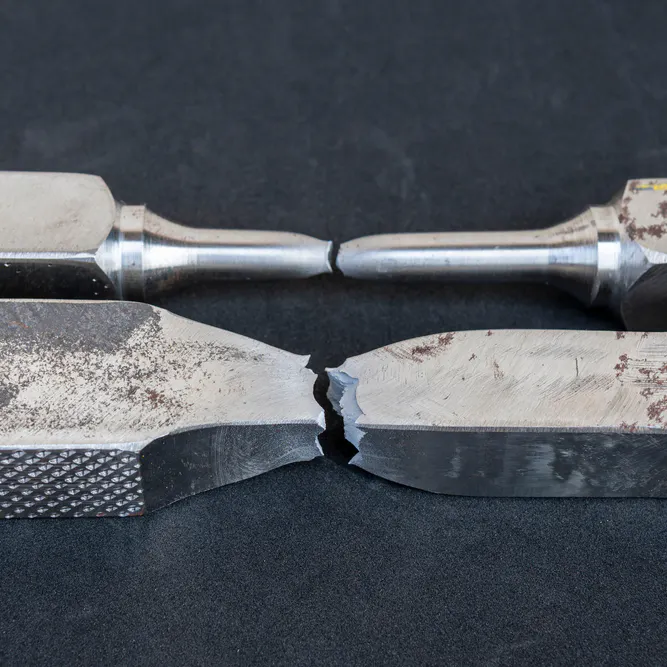
The stress-strain curve defines a graphical representation of the relationship between internal pressure and physical deformation in a material. Mechanics of materials experts generate the plot by recording measurements during a tensile test (pulling a standardized specimen). Stress occupies the vertical axis. Strain sits on the horizontal axis. The diagram provides a comprehensive map of material behavior under load. The initial linear segment describes the elastic region. Materials return to the original dimensions after the removal of the force in the section (coiled springs). The slope of the line indicates the stiffness of the substance. The curve reaches the yield point. Yielding marks the start of the plastic region. Permanent deformation occurs due to dislocation movement and slip within the crystal lattice. The highest coordinate on the plot signifies the ultimate tensile strength. Localized thinning (necking) begins after the peak. The final point represents the fracture where the material snaps. Engineers use the data to verify structural integrity (steel beams). Accurate interpretation prevents failure in mechanical systems. Brittle substances (ceramics) show a short curve. Ductile materials (copper) display a long plastic region. The graph represents a requirement for certifying industrial materials. Every coordinate provides unique information about the strength of the sample. Structural safety depends on the accuracy of the plotted values. Laboratory technicians calibrate the equipment to ensure precise results. The visual model simplifies complex molecular interactions into a readable format.
What Is Stress?
Stress is the internal force per unit area within a material when an external load is applied. Mechanics of materials defines stress as the intensity of internal forces per unit area. A mathematical expression involves force divided by the cross-sectional area of the object. Units of measurement include Pascals or Newtons per square meter. A material experiences different types of internal forces (tension, compression, shear, or torsion) based on the application of the external load. Structural integrity depends on the ability of the material to withstand the intensity without permanent damage. High levels of internal pressure lead to microstructural changes or permanent shifts in the atomic arrangement. Engineers calculate the value to determine the safety limits of bridges (steel girders) or buildings (concrete pillars). Material failure occurs when the internal resistive force exceeds the atomic bonding strength of the substance. Understanding the distribution of internal forces helps in designing parts that avoid localized weak spots. Precise measurements allow the comparison of different materials under identical loading conditions. Designers rely on the data to ensure that components remain functional during the service life. Predictable behavior under load is a requirement for modern structural systems. Accurate data points prevent the overestimation of the capacity of the substance to carry weight. Normalizing the force by area provides a consistent metric. The stress remains a critical factor in mechanical engineering.
How Is Stress Defined in Materials Science?
Stress in materials science refers to the internal resistive force developed within a body per unit area during the application of external loads. The quantity describes how strongly the atomic bonds are being pushed or pulled apart. Materials science categorizes the phenomenon into normal stress and shear stress based on the orientation of the force relative to the surface area. Normal stress acts perpendicular to the surface (tension or compression). Shear stress operates parallel to the surface (sliding forces). Scientists use the value to characterize the mechanical properties of metals (aluminum), ceramics (alumina), or polymers (polyethylene). The intensity of the internal reaction determines the susceptibility of the material to deformation or fracture. Laboratory tests quantify the force intensity to develop safety protocols for industrial equipment. Theoretical models explain the relationship between molecular structure and the ability to distribute applied loads. High-performance materials are engineered to maintain structural stability under extreme pressures. Every material possesses a limit where the internal forces cause a permanent break in the lattice structure. Accurate definitions help the development of advanced alloys and composites for specialized applications. The stress and force intensity are requirements for predicting the lifespan of a component.
Is Stress Measured As Force per Unit Area?
Yes, stress measurement involves force divided by the area over which the force is distributed. The mathematical formula consists of the applied load over the cross-sectional area. Standard international units of measurement are Pascals (Pa). One Pascal equals one Newton per square meter. Engineers use megapascals (MPa) to describe industrial materials (structural steel or aerospace alloys). The standard measurement allows direct comparisons between materials of different sizes and shapes. Normalizing the force by area provides a consistent metric that remains independent of the total volume of the part. A small wire and a large beam experience the same intensity if the force-to-area ratio stays identical. Precise calculations prevent the overestimation of the capacity of a material to carry weight. Designers check the force intensity against the yield strength of the substance. Measuring force per unit area remains the foundation of structural analysis and mechanical engineering. Accurate data points ensure that components do not reach the breaking point during operation. Standardizing the measurement helps global collaboration in construction and manufacturing.
What Is Strain?
Strain represents the measure of deformation or change in dimensions in a material resulting from applied stress. The phenomenon describes how much a material stretches (tension) or compresses (compression) relative to its original size. Materials engineering defines the concept as a dimensionless ratio comparing the change in length to the initial length. Different types of deformation exist (axial strain, lateral strain, and shear strain). Linear strain refers to the change in length along the direction of the force. Shear strain describes the change in the angle between two lines that were originally perpendicular. Total deformation provides insights into the elasticity and plasticity of the substance. Engineers use the measurement to evaluate how a structure reacts to environmental loads (wind or weight). A rubber band exhibits high levels of change before breaking. A diamond shows change under the same load. Quantifying the shape change is a requirement for determining the flexibility of a component. Precise data allows the prediction of structural shifts in large assemblies. Monitoring the dimensional changes prevents catastrophic failure in aging structural systems. The measurement captures the response of the atomic lattice to pressure. Designers rely on the data to ensure that components remain functional.
How Is Strain Calculated in Materials Engineering?
Strain is calculated in materials engineering by dividing the change in length of a material by its original length. The mathematical formula is expressed as the Greek letter epsilon (ε) equals delta L (change in length) over L zero (initial length). The resulting value is a dimensionless ratio since the units of length cancel each other out. Percentages are used to describe the magnitude of the shape change (2 percent elongation). Engineers perform the calculation during tensile tests to monitor the behavior of the specimen. Shear strain calculation involves the tangent of the angular displacement of the material. Normalizing the deformation allows the comparison of results across different specimen sizes. Precise calculations help determine the Poisson ratio of a substance. The ratio describes the relationship between axial stretch and lateral contraction. Understanding the math behind the shape change is a requirement for designing precision parts. Accurate calculations ensure that moving parts fit together after being subjected to operational loads. Detailed records of dimensional changes guide the selection of materials for flexible or rigid applications.
Does Strain Measure Material Deformation?
Yes, strain directly measures deformation by quantifying the physical change in shape or size under an applied load. The metric indicates how much a substance distorts from the original equilibrium state. Higher values signify greater levels of material distortion (stretching, squashing, or twisting). The measurement captures temporary changes (elastic deformation) and permanent shifts (plastic deformation). Engineers look at the value to understand the ductility of a metal or the brittleness of a ceramic. A high measurement to a ductile metal shows that the part bends before it breaks. Low values for brittle materials indicate a sudden failure without prior warning. Measuring the distortion is a requirement for assessing the performance of structural components (beams, cables, or gears). Monitoring the physical shift helps identify potential fatigue in parts subject to repeated cycles. Precise measurement of deformation ensures that mechanical systems operate within the design tolerances. Designers rely on the data to create components that maintain the shape during service.
What is the Stress Strain Curve?
The stress-strain curve is a graph showing how a material deforms under a continuously increasing load. The plot places stress (force per unit area) on the vertical axis and strain (deformation ratio) on the horizontal axis. A tensile test provides the data points needed to construct the diagram. The curve reveals the mechanical behavior of the material from the initial loading stage to the final failure point. Key regions identified on the graph include the elastic region (linear slope), the plastic region (curved section), and the fracture point (the break). The shape of the curve distinguishes between ductile materials (copper) and brittle materials (glass). The modulus of elasticity is determined by the steepness of the initial straight line. Yield strength marks the transition where permanent deformation begins. The graph serves as a roadmap to understanding the strength and toughness of a substance. Precise plotting allows engineers to determine the maximum capacity of a part. Visualizing the relationship between force and strain is a requirement for safety analysis. Every material produces a unique signature on the graph. The diagram is a requirement for modern material characterization.
How Does the Stress Strain Curve Describe Material Behavior?
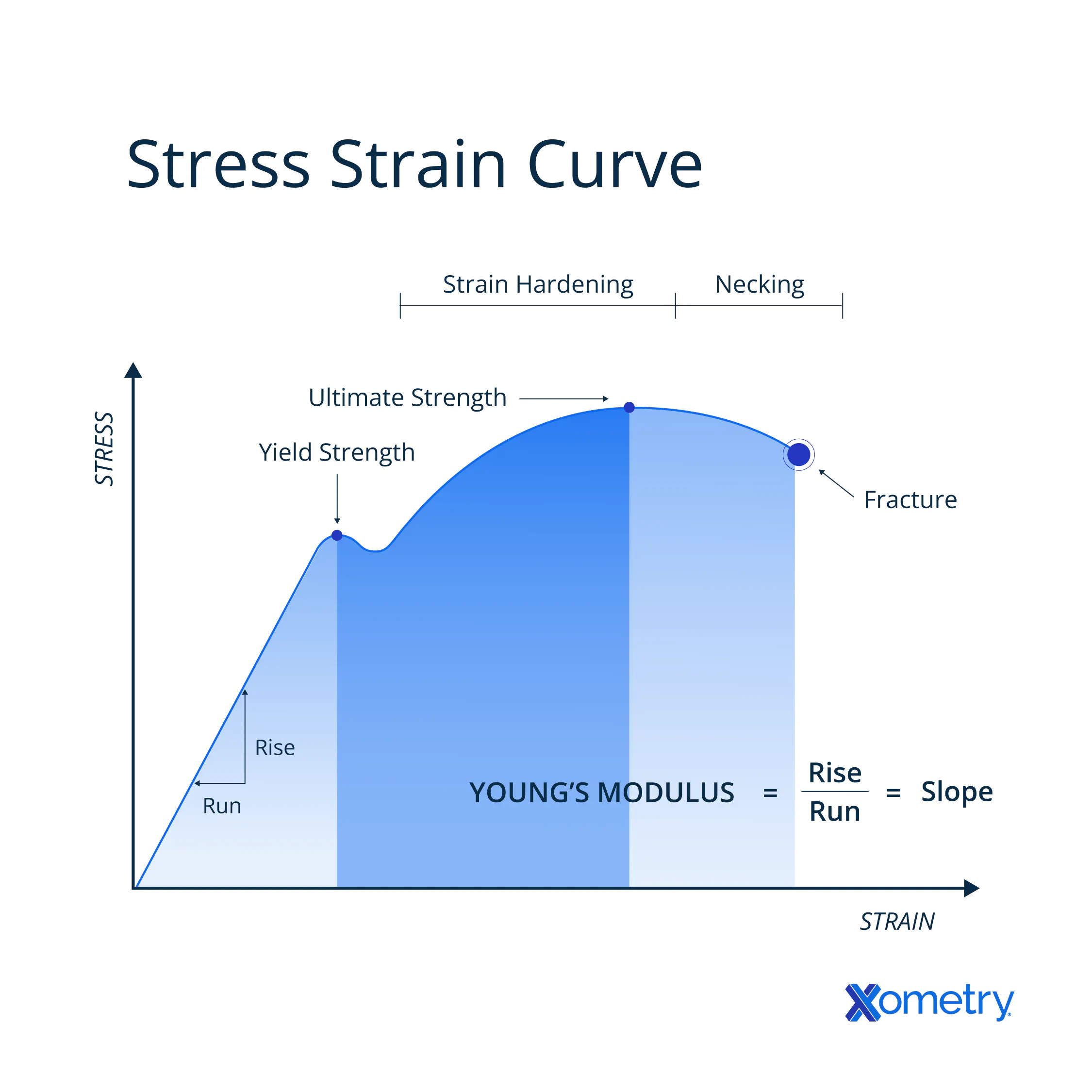
The stress strain curve describes material behavior by illustrating the transition through different mechanical states under a load. The initial linear portion represents the elastic stage, where the substance returns to its original shape upon unloading. The slope of the line indicates the stiffness (Young's modulus) of the material. The curve reaches the yield point as the load increases, marking the start of the plastic region. The plastic stage involves permanent deformation due to changes in the crystal structure (dislocation movement). Ultimate tensile strength represents the maximum stress (force per unit area) the material withstands. The final point on the graph indicates the fracture region where the material breaks. Engineers analyze the area under the curve to measure toughness (energy absorption). A wide plastic region signifies a ductile material that bends before breaking. A short curve characterizes a brittle substance that fails suddenly. The graph provides a comprehensive overview of the ability of the material to handle pressure failure. Accurate interpretation of the curve is a requirement for mechanical part design.
Does the Stress Strain Curve Show Elastic?
Yes, the stress strain curve shows both the elastic and plastic regions of material behavior. The initial straight line on the graph represents the elastic region where the relationship between stress and strain remains linear (Hooke's Law). The material behaves like a spring in the section and recovers its size when the load is removed. The yield point signifies the boundary where the linear behavior ends. The curved region following the yield point represents the plastic stage. The plastic region shows permanent deformation where the substance undergoes an irreversible change in shape. The distinction helps predict permanent deformation during the design phase. Engineers use the distinction to set safe operating limits to machinery (turbines) and structures (columns). Accurate visualization of the stages prevents the accidental overloading of components. Understanding the shift from reversible to permanent change is a requirement for structural safety. The curve indicates macroscopic yielding; plastic deformation in metals is primarily due to dislocation motion.
Why Are Stress-Strain Curves Important?
Stress strain curves are important in helping predict how materials perform under load. The diagrams guide material selection by providing objective data on strength (yield strength), stiffness (Young's modulus), and ductility (elongation). Engineering design relies on data to establish safety factors for every component in a structure. The risk of structural failure increases if material properties are not properly characterized, often using stress-strain data. The curves allow the comparison of different batches of materials to ensure quality control in manufacturing. Precise plotting identifies the point where a part warps or breaks during use. Analysis of the data helps optimize the weight of parts (aircraft components) without sacrificing safety. Structural integrity in bridges or buildings depends on the accurate application of the properties revealed by the curve. Designers use the information to prevent catastrophic events in public structural systems. The graphs provide the evidence needed to certify materials for high-pressure environments. Every material scientist relies on data to develop new substances with improved durability. Accurate material limits prevent the failure of critical infrastructure components.
How Are Stress-Strain Curves Used in Engineering Design?
Stress strain curves guide material selection and safety design in modern engineering projects. Designers refer to the yield strength indicated on the graph to ensure that parts do not undergo permanent deformation. The elastic modulus helps in calculating the deflection of beams or the compression of supports. Safety factors are established by selecting a working stress and yield strength below the ultimate strength shown on the curve. Material selection is guided by the ductility and toughness requirements of the specific application. High-stress environments (engine cylinders) require materials with a high ultimate tensile strength. Flexible components (springs) are designed based on the linear elastic region. The graphs allow engineers to simulate the lifespan of a part under repeated stress cycles. Accurate data from the curve reduces the likelihood of unexpected part failure. Structural analysis software inputs the curve data to perform finite element analysis on complex shapes. Precise application of the properties ensures the long-term reliability of mechanical systems. Understanding the limits of a substance is a requirement for building safe consumer products.
Do Stress-Strain Curves Help Predict Material Failure?
Yes, stress strain curves help predict material failure by identifying the precise point where a substance can no longer withstand an applied load. The fracture point on the graph marks the final failure of the material, where it physically snaps or tears. Ultimate tensile strength represents the maximum stress (force per unit area) and typically corresponds to the onset of necking in ductile materials. Engineers use the points to determine the upper limits of safe operation for any given part. Identifying the transition from elastic to plastic behavior helps avoid permanent structural damage. The shape of the curve near the fracture point shows whether the failure is gradual (ductile) or sudden (brittle). Sudden failures are dangerous in load-bearing structures like elevators or cranes. Gradual failures provide a warning through visible deformation before the final break. Understanding the failure onset helps implement maintenance schedules and inspection intervals. Accurate data from the curves allows for the creation of components that remain stable under peak loads. It helps engineers avoid dangerous load conditions.
How Are Stress-Strain Curves Generated?
Stress strain curves are generated through controlled mechanical testing in a specialized laboratory environment. A universal testing machine (UTM) applies a continuous force to a standardized specimen of the material. The equipment pulls (tension) or pushes (compression) the sample at a constant rate. Load cells measure force, not stress; stress is calculated from force divided by cross-sectional area. Simultaneously, deformation sensors (extensometers or strain gauges) track the change in length of the specimen. The raw data points are recorded continuously by a computer system connected to the sensors. The recorded force is divided by the original area to find stress once the test is complete. The change in length is divided by the original length to find strain. The coordinates are plotted to form the characteristic shape of the material behavior curve. The process follows strict international standards to ensure the repeatability of the results. Detailed data collection provides a high-resolution view of the mechanical response of the substance. Load and deformation are recorded continuously to ensure the data is accurate.
What Testing Methods Are Used To Create Stress-Strain Curves?
The data is recorded and plotted to form the curve using tensile, compression, and torsion tests. Tensile testing involves pulling a sample until it fractures and remains the industry standard for determining material properties. The process records how the material elongates under a pulling force. Compression testing pushes a sample together and is used to test materials (concrete or stone) that carry heavy weights. Torsion testing twists the specimen to measure shear properties. Load cells measure force in all tests, but extensometers are primarily used in tensile tests; torsion uses angular measurement devices, and compression may use displacement sensors. Data points are recorded continuously to ensure the resulting curve captures every transition in behavior. Standardized specimens are used to ensure the failure occurs in the monitored section. The choice of the test depends on the expected load in the real-world application of the part. Accurate measurements provide the necessary data for structural analysis and material certification. High-precision equipment ensures that the resulting curve reflects the performance of the substance. Controlled mechanical testing provides a reliable map of material strength.
Is Tensile Testing Required To Generate the Curve?
Yes, tensile testing remains the industry standard to generate the most comprehensive stress strain curve for ductile materials. The procedure involves pulling a standardized sample until the sample reaches the point of fracture. Other mechanical tests, like compression or bending, generate stress strain data. The tensile test provides detailed information about the elongation and necking behavior. Industry standards define the specific requirements for conducting the test. The resulting diagram identifies the yield point, ultimate strength, and ductility of the substance. Tensile testing reveals properties difficult to measure in other loading modes. Engineering handbooks publish data derived from tensile experiments for design calculations. The data is plotted to form the characteristic curve used by engineers globally. Compression tests are used on brittle materials that do not stretch. The tensile test provides the baseline for characterizing the strength of metals and polymers. Precise execution of the test ensures the accuracy of the resulting material behavior model.
What Are the Different Ways To Measure Stress?
Stress is measured using load sensors and strain gauges to ensure accurate material analysis. Universal testing machines use load cells to measure the total applied force on a specimen. A load cell converts the physical force into an electrical signal that a computer interprets. Internal force intensity is then calculated by dividing the recorded load by the cross-sectional area of the part. Strain gauges are attached to the surface of a component to measure localized deformation used to calculate stress through known material properties. Photoelasticity uses light to visualize the distribution of forces in transparent models. Digital image correlation (DIC) tracks the movement of speckle patterns on a surface to measure deformation and internal reactions. Ultrasonic testing primarily detects flaws and material discontinuities; stress measurement requires specialized ultrasonic techniques and calibration. The measurements ensure accurate material analysis for structural safety. Precise sensors allow monitoring of large structures in real-time. Data from the devices prevents the overloading of critical components. Mechanical testing machines record applied force continuously to capture every variation in applied force (and deformation).
What Measurement Techniques Are Used for Stress?
Measurement techniques used to measure stress include the use of load cells, hydraulic sensors, and strain-to-stress conversion based on material constants. Load cells remain the common tool in laboratory environments (universal testing machines) for measuring applied force. The devices use the piezoelectric effect or resistive change to quantify the strain used by load cells. In industrial applications, pressure transducers monitor the internal forces in hydraulic and pneumatic systems. Engineers apply strain gauges to the surface of parts to monitor dimensional changes. The measured deformation is converted into stress values using the modulus of elasticity of the material. X-ray diffraction is used to measure residual stress within the atomic lattice of metals after welding or machining. Accurate data collection ensures that components remain within the safe operating limits. The measurements are necessary for the development of high-performance components in the aerospace and automotive industries. Reliable sensors provide continuous monitoring of structural systems to detect potential failures early. The data is recorded and analyzed to improve the durability of future designs.
What Measurement Techniques Are Used for Strain? Measurement techniques used to measure strain include extensometers, bonded strain gauges, and non-contact optical systems like digital image correlation. Extensometers are mechanical devices clipped onto a test specimen to measure the increase in length during a tensile test. The devices provide high precision for measuring small elastic deformations. Bonded strain gauges are sensors glued to a surface that change electrical resistance when the material stretches or compresses. Digital image correlation uses high-resolution cameras to track a pattern on the surface of a part as it deforms. Its non-contact method allows the measurement of the entire surface area rather than a single point. Laser interferometry measures dimensional changes with accuracy using the interference patterns of light. The techniques help engineers quantify material deformation across various scales. Precise data is necessary to validate computer simulations of structural behavior. Monitoring the physical shift in components ensures that they operate within safe design tolerances. The data is recorded continuously to capture the history of deformation under load.
Are Sensors Commonly Used?
Yes, sensors are commonly used in the measurement and testing of material properties. Load cells and strain gauges are standard tools in laboratory and industrial settings. Load cells measure the force applied to a structure (bridge cables or aircraft wings). Strain gauges are glued to the surface of components to monitor localized distortion. The devices provide real-time, precise data to engineers to assess the health of a structure. Advanced sensors include fiber optic systems that measure deformation along the entire length of a cable. Displacement transducers track the physical movement of mechanical parts with accuracy. The use of sensors allows for the continuous monitoring of safety-critical systems in real-time. Data from the devices is used to prevent catastrophic failure by alerting operators to excessive loads. Mechanical testing machines rely on integrated sensors to produce accurate stress-strain data. High-resolution sensors are necessary for modern structural health monitoring. The devices ensure that materials perform as expected during the entire service life.
What Are the Stages of the Stress-Strain Curve?
The stress strain curve consists of several distinct stages that represent the mechanical response of a material to an increasing load. Understanding the phases is a requirement for predicting how a part performs in real-world conditions.
- Elastic Stage: The material undergoes reversible deformation, where the material returns to the original shape after the load is removed. The phase follows a linear relationship between stress and strain (Hooke’s Law). The stage represents the stiffness of the atomic bonds.
- Yielding Stage: The material reaches a limit where permanent deformation begins to occur. Atomic layers slide past each other irreversibly. The point marks the transition to the plastic region.
- Plastic Stage: The material deforms permanently without a significant increase in load in specific cases. Dimensional changes occur as the microstructure shifts. The phase demonstrates the ductility of the substance.
- Strain Hardening: The material becomes stronger as the crystal structure undergoes further deformation. The curve rises as the resistance to further stretch increases. The process is common in manufacturing to strengthen metals.
- Necking Stage: The material begins to thin out at a localized point of the specimen. After necking begins, engineering stress decreases due to area reduction, while true stress may continue to increase. The stage leads directly to the final failure.
- Fracture Stage: The material physically breaks at the necked region. The point marks the total failure of the component. The coordinate represents the end of the test.
What Happens at Each Stage of the Stress-Strain Curve?
At each stage of the stress strain curve, the material undergoes specific physical and microstructural changes. The material behaves like a spring and returns to its original shape because the atomic bonds only stretch slightly in the elastic stage. Yielding occurs when stress exceeds the yield strength, causing permanent deformation primarily through dislocation motion. The plastic stage involves irreversible deformation, where the material changes shape forever. The substance undergoes strain hardening during the plastic stage, making it resistant to further deformation. As the peak stress is reached at the ultimate tensile strength, necking starts. Necking is the localized thinning of the material that reduces its capacity to carry a load. Finally, the fracture point is reached, and the material breaks completely. Yield marks the transition, and fracture is the final failure. Understanding each stage helps predict material behavior under loading conditions. Engineers use the stages to determine the limits of safe operation. Precise data from each phase is necessary for structural design and manufacturing.
Do All Materials Follow the Same Stress-Strain Stages?
No, every material does not follow the same stress-strain stages. Brittle materials fracture without a clear plastic region. Ductile materials show more pronounced plastic deformation. The behavior depends on the molecular structure and bonding of the substance. Ductile materials (low-carbon steel or aluminum) show a pronounced plastic region and a clear necking stage before fracture. Ceramics frequently fracture after reaching the elastic limit with very little warning. In brittle failure, the material breaks suddenly after reaching the elastic limit. Elastomers (rubber) exhibit a non-linear elastic region where they stretch significantly and still return to the original shape. Specific polymers show a unique stage called drawing, where the molecules align under tension. The absence or presence of specific stages defines the mechanical properties of the substance. Recognizing the differences is necessary to select the right material for a specific job. High-stress applications require materials that provide a warning through deformation before breaking. Understanding the variations in stages helps engineers design more reliable products.
True stress–strain behavior becomes critical beyond uniform elongation, particularly as necking begins and cross-sectional area localizes. Engineering stress, referenced to the original area, progressively underestimates internal force once significant plastic deformation occurs. In contrast, true stress reflects the instantaneous load-bearing area, capturing the increase in resistance from strain hardening. This distinction is essential in the plastic regime, where deformation is governed by dislocation interactions. For forming processes such as rolling, extrusion, and deep drawing, true stress–strain data provides the accuracy required for constitutive modeling. The logarithmic definition of true strain treats deformation as a continuous, incremental process rather than a fixed reference. As a result, true stress–strain curves are indispensable for predicting failure and ensuring simulation fidelity under large deformation.
How Do You Read a Stress-Strain Graph?
Read stress on the vertical axis and strain on the horizontal axis to understand material performance. Start at the origin, where both values are zero, and follow the line upward. The initial straight section shows the elastic region where the material recovers its shape. The steepness of the line indicates the stiffness of the material. Locate the yield point where the line begins to curve, marking the start of permanent deformation. The plastic region follows, showing how the material stretches under continued load. Find the highest point on the curve, which represents the ultimate tensile strength. The curve drops toward the fracture point where the material breaks after the peak. The shape and length of the curve reveal the ductility and toughness of the substance. A ductile material typically shows a long plastic region with significant strain before fracture. A short, steep curve characterizes a brittle substance. Key points like yield, ultimate strength, and fracture reveal the limits of the part. The curve shape reveals material properties. Accurate reading prevents the misuse of materials in industrial applications.
What Do the Axes and Key Points Represent on the Graph?
The axes and key points on a stress strain graph represent the fundamental mechanical properties and limits of a material. The y-axis represents stress, and the x-axis represents strain. The origin shows the state of the material before any load is applied. The initial linear slope represents Young's Modulus, which indicates the stiffness of the substance. Key points include yield strength, which is the limit of reversible deformation. Ultimate tensile strength is the peak of the curve, representing the maximum stress the material withstands. The fracture point marks the breaking stress and strain, representing the end of the test. Ductility is determined by the total strain at the moment of fracture. Toughness is represented by the total area under the curve. The markers are used by designers to set safety margins for mechanical parts. Accurate identification of the points prevents the overloading of structural systems. The graph serves as a tool for material comparison and engineering analysis. The points indicate material limits and guide the design process.
Can a Stress-Strain Graph Predict Material Failure?
Yes, a stress strain graph can predict material failure by identifying the critical points where a substance loses its structural integrity. The graph shows where failure occurs by marking the ultimate tensile strength and the final fracture point. The ultimate tensile strength indicates the maximum stress the material can withstand. Localized necking begins once the peak is passed, signaling imminent breakage. The fracture point marks the breaking stress where the material physically separates. Engineers use the values to establish safety factors, ensuring that the working stress stays below the failure limits. Monitoring the curve helps avoid dangerous load conditions that lead to sudden collapse. Brittle failure is predicted by a lack of a plastic region, while ductile failure is preceded by stretching. Accurate data from the graph allows for the prevention of accidents in construction and manufacturing. The diagram provides a reliable way to assess the risk of breakage in real-world applications. Engineers use the fracture point to avoid unsafe loads.
What Are the Different Regions of the Stress-Strain Curve Graph?
The different regions of the stress strain curve graph are the elastic, plastic, and fracture regions. Each region represents a distinct material response to the applied force. The elastic region is the initial phase where the material returns to its original shape upon unloading. The relationship between stress and strain is linear in the section. The plastic region follows the yield point and shows permanent deformation. Plastic deformation occurs primarily through dislocation motion within the crystal structure. Strain hardening and necking occur as the material nears its limit in the plastic region. The fracture region is the final part of the curve where the material breaks. Transitioning between these regions signals a behavioral change. Recognizing these phases helps engineers design structural systems that remain safe under peak loads. The diagram serves as a map to the performance of any substance. Precise identification of the regions prevents the misuse of materials in industrial applications. Each region represents a distinct material response.
How Are Plastic and Fracture Regions Defined?
The plastic and fracture regions are defined by the permanent change and final failure of a material. The plastic region starts immediately after the yield point, where the material can no longer return to its original shape. Plastic deformation in metals occurs primarily through dislocation motion, while polymers may deform through chain alignment and sliding. Elongation occurs significantly in the section of ductile materials. The plastic region includes the peak of the curve, known as the ultimate tensile strength. The fracture region begins after the ultimate strength is reached, and localized necking occurs. The engineering stress decreases after necking due to area reduction, while true stress may continue to increase. The fracture point itself is the coordinate where the specimen breaks into pieces. The regions are used to evaluate the ductility and toughness of a substance. Engineers analyze the plastic behavior to determine if a part provides a warning before failing. Fracture data is used for failure analysis and fracture mechanics.
The total area in the regions determines the energy absorption capacity of the part.
Does Each Region Indicate a Change in Material Behavior?
Yes, each region of the stress strain curve reflects a different mechanical response and change in the internal behavior of the material. Elastic is reversible, plastic is permanent, and fracture is failure. The shift from one region to the next signals that the material has reached a physical limit. Strain hardening in the plastic region shows that the material becomes more resistant to further deformation. Necking indicates that the material has begun to fail locally due to area reduction. The fracture region marks the complete separation of the material structure. Each region reflects a different mechanical response and behavioral change. Recognizing these changes is critical in design to avoid permanent damage to parts. High-stress parts must remain in the elastic region to ensure long-term functionality. Safety margins are calculated based on the proximity of the operating load to the plastic transition. Proper understanding of these shifts prevents catastrophic failures in engineering systems.
How Is a Stress-Strain Curve Made?
A stress-strain curve is made during a tensile test by applying a controlled pulling force to a standardized specimen until fracture occurs. The universal testing machine grips the specimen at both ends and increases the load at a constant rate while measuring the applied force and the resulting elongation. The Universal Testing Machine (UTM) records force and displacement continuously throughout the test. The machine converts force into engineering stress by dividing the load by the original cross-sectional area of the specimen. The machine converts elongation into engineering strain by dividing the change in length by the original gauge length. The software plots stress on the vertical axis and strain on the horizontal axis in real time. The resulting stress-strain curve reveals key mechanical properties of the material. The initial linear region represents elastic deformation, where the material returns to its original shape after unloading. The curve then reaches the yield point, followed by plastic deformation, where permanent deformation occurs. The highest point on the curve indicates ultimate tensile strength, and the final drop marks fracture.
What Testing Methods Are Used To Create a Stress-Strain Curve?
Tensile testing is the primary method used to create a stress strain curve by pulling a sample until it breaks. The method provides detailed data on the elongation and strength of the substance. Compression testing is also used when the material is expected to support a heavy weight. Compression tests push the sample together to measure how the sample shortens and widens. Bending tests are used to determine the flexural properties of materials. The chosen test depends on the material type and its intended real-world application. Brittle materials are frequently tested in compression because the materials are prone to cracking in tension. Most testing methods use load cells, but deformation measurement methods vary (extensometers, LVDTs, optical systems, or angular sensors depending on the test). High-precision instruments ensure that the resulting curve reflects the performance of the substance. The data is used to develop safety protocols and material certifications. Reliable testing is a requirement for the production of safe and durable components. The chosen test depends on the material and application.
Is Tensile Testing Required To Generate the Curve?
No, tensile testing is not required to generate the most comprehensive stress strain curve for ductile materials. The procedure involves pulling a standardized sample until the sample reaches the point of fracture. Other mechanical tests, like compression or bending, generate stress strain data. The tensile test provides detailed information about the elongation and necking behavior. Industry standards define the specific requirements for conducting the test. The resulting diagram identifies the yield point, ultimate strength, and ductility of the substance. Tensile testing remains the industry standard since the test reveals properties difficult to measure in other loading modes. Engineering handbooks publish data derived from tensile experiments for design calculations. The data is plotted to form the characteristic curve used by engineers globally. Compression tests are commonly used for brittle materials, but ductile materials can also be tested in compression. The tensile test provides the baseline for characterizing the strength of metals and polymers. Precise execution of the test ensures the accuracy of the resulting material behavior model.
How Are Stress-Strain Curves Used in Manufacturing and 3D Printing?
Stress strain curves guide material selection and process optimization in manufacturing and additive manufacturing. Manufacturers use the graphs to determine if a material survives forming processes (stamping or forging). The curves help select the right filament or resin for functional parts in the field of 3D Printing. The diagrams allow engineers to predict how printed components behave under a load. Designers analyze the curves to optimize print settings (infill density or layer height) for maximum strength. The graphs help identify the anisotropy of printed parts where strength varies with the print direction. Better data from the curves leads to fewer print defects and failures. The data reduces waste and improves the reliability of the final part. Engineers rely on the diagrams to establish safety margins for custom components. Understanding the mechanical behavior of a material is a requirement for high-quality production. The data revealed by the curve ensures that parts remain functional throughout the service life. Reliable material characterization is a requirement for successful 3D Printing.
How Do Engineers Apply Stress-Strain Data To Part Design?
Engineers apply stress strain data to part design by determining the allowable stress for a given material. The yield strength from the graph sets the upper limit to loads to prevent permanent deformation. Working stress is calculated by applying a safety factor to the yield strength. The component remains in the linear elastic region during its entire operation. The modulus of elasticity is used to calculate the stiffness and deflection of beams or supports. Ductility data helps in designing parts that absorb energy without sudden failure. Toughness values are used for components subjected to impact loads (car bumpers). Designers use the data to select the appropriate thickness and shape of a part for a specific weight. Accurate application of the curve properties prevents structural collapse. Stress-strain data is input into simulation software to test designs digitally. Refining the part before physical prototypes are built is possible with the data. Precise engineering design depends on the accurate interpretation of the material behavior curve. It prevents structural failure in real applications.
Can Stress-Strain Curves Reduce Print Failures?
Yes, stress strain curves can reduce print failures by helping optimize material and process settings in additive manufacturing. The graphs reveal the mechanical behavior of a material after testing, which can then be used to predict weaknesses before printing. Engineers use the data to determine if a specific filament or resin possesses enough strength for the intended application. The curves show the limit of safe load. The data prevents the accidental design of weak parts. Understanding the mechanical behavior allows designers to adjust infill patterns and orientation to improve part durability. Better data from testing leads to fewer print defects like cracking or delamination. Identifying the yield point helps set realistic service expectations for custom parts. Pre-testing materials provides a reliable way to avoid structural failure in real-world use. Continuous monitoring of material properties ensures a higher success rate for complex prints. Designers use the information to create components that remain stable under peak loads. It prevents the loss of time and resources associated with failed prints.
Why Is Stress-Strain Data Important for CAD?
Stress strain data is important for modern engineering software. Designers input the properties (Young's modulus and yield strength) into the software to perform structural analysis. Computerized tools use the information for finite element analysis (FEA) to predict how a part deforms under pressure. The simulation identifies potential failure points before a physical prototype is made. Accurate material data improves the reliability of the design, providing a realistic model of performance. Missing information can make simulations inaccurate and potentially misleading, increasing design risk. Structural and fatigue analysis depend on the precise coordinates of the stress-strain relationship. The data helps optimize the weight and shape of a component. Engineers rely on the simulations to save time and reduce manufacturing costs. Reliable modeling reduces the risk of parts failing in service. Accurate data is a requirement for Computer-Aided Design (CAD) Modeling. Realistic simulation of material behavior is possible with accurate data points. Modern design tools depend on the precise coordinates of the stress-strain relationship to produce safe components.
How Is Stress-Strain Data Used in CAD?
Stress strain data is input into simulation and finite element analysis tools in the digital design environment. The software uses the mathematical relationship between stress and strain to model the behavior of a part under load. Engineers define the material properties in the CAD environment using data derived from laboratory tests. The system calculates the distribution of stress across the geometry of the component. CAD predicts deformation and identifies areas where the stress exceeds the yield limit. The data allows designers to refine the shape and thickness of the part to avoid localized failure. Thermal stress analysis uses the data to predict changes due to temperature shifts. High-fidelity simulations require the full stress-strain curve for non-linear analysis. Accurate modeling helps select the safest material for the job. The data helps refine designs before manufacturing starts. Structural health and performance are validated digitally using the curve data. This helps in predicting deformation under load.
Can Incorrect Material Data Cause Design Failure?
Yes, incorrect material data can cause catastrophic design failure in engineering and manufacturing. Wrong data leads to weak designs appearing safe in a computer simulation but failing in reality. The part undergoes unexpected permanent deformation if the yield strength is overestimated. Underestimating the brittleness of a substance causes a sudden breakage without warning. Structural components must be designed with appropriate safety factors and validated data. Faulty data leads to the selection of a material that cannot handle the operational loads. Inaccurate testing results in the creation of parts that are too heavy or too weak. Accurate testing is a requirement for safe engineering. Precise material characterization is necessary for safe and reliable engineering. Designers must verify the accuracy of the data used in the calculations. Structural integrity depends on the quality of the information provided by material tests. High-quality data is necessary for the prevention of accidents and the success of any engineering project.
How Are Stress-Strain Curves Used?
Stress strain curves are used to evaluate material strength and ductility in a wide range of engineering applications. Engineers rely on the diagrams for safety and performance calculations in construction, aerospace, and automotive design. The graphs guide the selection of materials providing objective data on the mechanical behavior. Manufacturers use the curves to set limits to forming and machining processes. Quality control departments use the data to verify that batches of material meet the required standards. Forensic engineers analyze the curves to understand why a structure failed during service. The diagrams are used to develop new alloys and polymers with improved properties. Academic researchers use the information to teach the principles of materials science. Precise plotting of the data points is necessary for accurate structural analysis. The graphs serve as a universal language for describing material performance. Understanding the relationship between stress and strain is necessary for modern engineering. The information provided by the curve ensures the safety of everyone using the final product.
How Do Engineers Use Stress-Strain Curves in Design?
Engineers use stress strain curves in design to select the most appropriate material based on the mechanical behavior. Engineers set load limits and safety margins by referring to the yield and ultimate tensile strengths on the graph. The elastic region helps in calculating the stiffness needed for parts like springs or aircraft wings. Toughness data from the area under the curve is used for parts that must resist impact. Ductility values guide the design of components that need to bend without snapping. High-stress environments require materials with high ultimate strength. Portable devices use the data to select lightweight materials that remain rigid. Stress-strain curves provide material behavior, but lifespan prediction requires fatigue data (S-N curves) and time-dependent analysis. Accurate interpretation of the curve ensures the durability and structural integrity of the component. This ensures that products remain safe and functional for the intended use. Detailed material data is a requirement for building reliable and high-performance structural systems.
Can Stress-Strain Curves Prevent Material Failure?
Yes, stress strain curves can prevent material failure by identifying the critical failure points of a substance. They show the maximum allowable stress before a part undergoes permanent deformation or breakage. Engineers design structures that always remain in the safe elastic region by knowing the yield strength. The diagrams provide a map of how much stress a material can withstand before failing. It identifies the moment when the risk of fracture increases. Understanding these limits helps in setting realistic service conditions for any given part. Proper use of the data reduces the risk of breakage during unexpected peak loads. Designers apply safety factors based on the data to create a buffer against failure. Monitoring material properties ensures that the components perform as intended. Accurate visualization of the mechanical limits prevents the accidental overloading of critical structures. It helps engineers create durable products that protect the public. Reliability in engineering is built on the precise application of the properties revealed by the curve.
What Is the Difference Between Engineering Stress-Strain and True Stress-Strain?
Engineering stress-strain and true stress-strain represent two ways to describe material behavior. Engineering stress uses the original cross-sectional area of the specimen in the calculation. The method is simple and common in design since the initial area is easy to measure. True stress uses the actual instantaneous cross-sectional area as the area thins during stretching. True stress accounts for necking in materials and provides accuracy at high levels of deformation. Engineering strain compares the change in length to the original length. True strain measures the continuous change based on the instantaneous length of the specimen. Engineering stress loses accuracy near the fracture point since the area reduces significantly. True stress shows that the material becomes stronger than the engineering curve suggests. Understanding the variations is a requirement for advanced structural analysis. Engineers prefer true stress to modeling metal forming or high-deformation processes. Precise calculations help predict failure in ductile metals. The study clarifies Stress vs. Strain: What Are the Key Differences?.
How Are Engineering and True Stress-Strain Calculated?
Engineering stress is calculated by dividing the applied force by the original cross-sectional area of the sample. The corresponding engineering strain is found by dividing the change in length by the original length. The calculations are straightforward and serve as the basis for standard mechanical testing reports. True stress is calculated by dividing the applied force by the actual cross-sectional area at the specific moment. The process requires monitoring the instantaneous diameter of the specimen during the test. True strain is found by taking the natural logarithm of the ratio between the current length and the original length. The method provides a precise measurement of continuous deformation with high precision. True stress strain data is necessary for accurate simulations of manufacturing processes like rolling or deep drawing. True stress equals engineering stress multiplied by one plus engineering strain, and true strain equals the natural logarithm of one plus engineering strain (valid before necking). Accurate measurements are necessary to understand the behavior of materials beyond the yield point. These calculations ensure the material model remains realistic under large deformations.
Is True Stress-Strain More Accurate at High Deformation?
Yes, true stress-strain is highly accurate at high deformation near fracture. It accounts for the reduction in cross-sectional area that occurs during stretching and necking. Engineering stress tends to underestimate the actual intensity of the internal forces because the formula assumes the area remains constant. True stress more accurately represents the actual stress state in the material based on instantaneous geometry. The level of precision is necessary for modeling manufacturing processes. High-deformation simulations in computer-aided engineering rely on true stress data for reliable results. Engineers prefer true stress to large deformations where the shape change is significant. The true curve provides a realistic representation of the energy absorbed by the material before failure. Accuracy near the breaking point is necessary to predict when a part snaps. Detailed material behavior models ensure that structural analysis remains valid under extreme conditions. Precise calculation of internal forces reduces the risk of premature failure, but does not guarantee prevention. Understanding the true mechanical response is necessary for advanced materials science.
Disclaimer
The content appearing on this webpage is for informational purposes only. Xometry makes no representation or warranty of any kind, be it expressed or implied, as to the accuracy, completeness, or validity of the information. Any performance parameters, geometric tolerances, specific design features, quality and types of materials, or processes should not be inferred to represent what will be delivered by third-party suppliers or manufacturers through Xometry’s network. Buyers seeking quotes for parts are responsible for defining the specific requirements for those parts. Please refer to our terms and conditions for more information.